
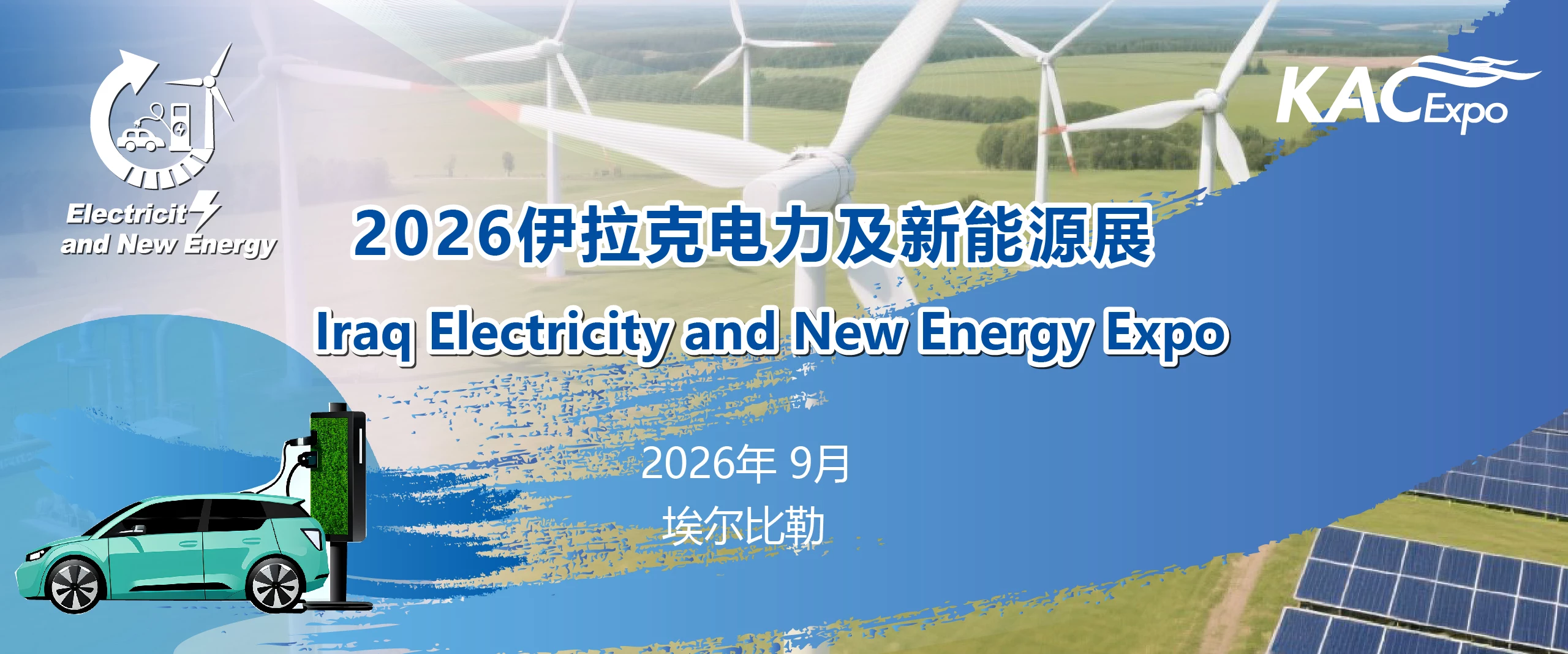
The 6th Iraq Electricity and New Energy Expo
Exhibition time: September 2026 (tentative)
Exhibition location: Erbil International Expo Center, Iraq
Host: KAC International Exhibition Group
Scope of exhibits:
1. Solar energy utilization: solar thermal, solar panel components, solar water heaters, solar stoves, solar heating, solar air conditioning, solar power generation systems, solar batteries, solar lighting fixtures, solar panels, photovoltaic modules;
2. Photovoltaic products: photovoltaic lighting systems and products, components and related production equipment, measurement and control systems, solar energy system control software, photovoltaic power generation systems;
3. Green and clean energy: wind turbines, wind power supporting products, biomass fuel, tidal energy and other ocean energy systems, geothermal energy, nuclear energy, etc;
4. Environmental protection: waste utilization, fuel electromagnetic, coal processing, air energy, environmental protection and energy conservation, pollution control and recycling, source policies, energy investment, etc;
5. Water treatment energy technology: water treatment technology and equipment, water supply and drainage systems, various valves, pumps, pipes, etc;
6. Green City: Green Buildings, Green Energy Transformation, Sustainable Development, Green Products, Practices and Technologies, Low Energy Buildings, Clean Transportation, etc
Project Introduction:
The Iraq Electricity and New Energy Exhibition is mainly aimed at relevant enterprises specializing in the field of electricity and energy, and has played a significant role in promoting the development of electricity and new energy throughout Iraq in the past few years. This also reflects the great attractiveness of Iraq's energy and electricity investment prospects.
The 5th exhibition in 2024 attracted nearly 180 exhibitors from the Middle East, Europe, South Asia and other regions, with an exhibition area of 17000 square meters and over 9000 on-site visitors, mainly local energy industry representatives and buyers and technical experts from neighboring countries.
During the exhibition, multiple technology promotion sessions and policy interpretation meetings related to energy infrastructure reconstruction were held, covering topics such as photovoltaic energy storage, upgrading of transmission and distribution networks, construction of independent power stations, clean energy access, and talent cultivation in the power industry, which received positive responses from participating institutions.
Introduction to Iraq:
The Republic of Iraq is located in southwestern Asia, northeast of the Arabian Peninsula, with a land area of 438317 square kilometers and a population of 40.22 million. In 2023, Iraq's gross domestic product reached 255 billion US dollars, a year-on-year increase of 2.3%.
After the Iraq War, Iraq pursued a proactive and pragmatic foreign policy, emphasizing the development of relations with major powers; Seeking cooperation with neighboring countries to create a favorable external environment for domestic stability; Strive to seek assistance from the international community for the post-war reconstruction of Iraq. At the beginning of the 21st century, Iraq had restored or established diplomatic relations with nearly 80 countries and resumed activities within regional and international organizations such as the Arab League, United Nations agencies, and the International Monetary Fund.
Iraq has the fifth largest proven oil reserves in the world. Oil exports are the absolute pillar of a country's fiscal revenue. In addition to abundant oil and gas resources, it also has fertile farmland, water resources, and a young population structure. After decades of war and international sanctions, infrastructure has suffered severe damage. The current core task is to rebuild and promote economic diversification on a large scale, reducing dependence on oil.
Market opportunities:
According to publicly available data from the International Energy Agency (IEA) and the World Bank:
The total installed capacity of electricity in Iraq is approximately 23GW, but due to aging transmission networks, unstable fuel supply, and equipment damage, the actual effective power supply capacity is far below the design load.
About 40% of the country's electricity comes from natural gas power generation, followed by oil and hydropower. The proportion of renewable energy is currently less than 2%, and there is huge room for improvement.
By 2030, Iraq plans to add about 10GW of solar installed capacity, and promote cross-border power grid cooperation with neighboring countries (such as Iran, Türkiye, Saudi Arabia).
The electricity shortage in Iraq in 2024 is about 10GW, especially during the peak summer period, which is a key factor restricting people's livelihoods and industrial development.
The government has launched multiple power grid upgrades and smart metering projects, which are expected to gradually improve infrastructure conditions over the next five years.
Diplomatic relations between the two countries:
Since China and Iraq signed the "the Belt and Road" cooperation document in 2015, bilateral cooperation in various fields has yielded fruitful results. China actively participates in the reconstruction of energy, infrastructure and other fields in Iraq, providing assistance to the best of its ability for Iraq's economic and social development. China is Iraq's largest trading partner, and Iraq is China's third largest trading partner among Arab countries. In 2023, the bilateral trade volume between China and Iran will be 49.74 billion US dollars. As a country along the the Belt and Road, Iraq will welcome more Chinese enterprises in the future.
