
From Oil Giant to AI Powerhouse: A $1.2 Billion Bet in the Desert
On one side, you have the world’s largest oil exporter. On the other, a $1.2 billion data center investment. This striking contrast feels particularly tangible and urgent against the backdrop of the just-approved "Year of Artificial Intelligence."I just came across this news from Davos, and the figure stopped me in my tracks.Saudi Arabia’s National Infrastructure Fund has signed an agreement with Humain, a local AI company, for a staggering $1.2 billion.The goal is clear: build a data center in the desert with a capacity of up to 250 megawatts.When the "world's largest oil exporter" starts aggressively acquiring computing power, the visual and psychological impact is hard to ignore. The phrase in the press release about "economic diversification" and "reducing dependence on oil" suddenly becomes very concrete.
A State-Backed Player with Deep Roots
What’s noteworthy is that Humain, despite being founded just last year, is wholly owned by the Public Investment Fund (PIF), Saudi Arabia’s sovereign wealth fund.This approach—a state-backed entity leading the charge—sends a clear signal: AI is no longer just a strategic choice for tech companies; it’s a core national endeavor.Even more critically, at this premier global stage in Davos, they’ve already connected with the world’s top AI players:
- Elon Musk’s xAI
- Blackstone-backed AirTrunk
Top-tier players are increasingly converging on Saudi Arabia.
From 250 Megawatts to 6 Gigawatts
The agreement outlines an ambitious target: Achieve 6 gigawatts of computing capacity by 2034.The leap from 250 megawatts today to 6 gigawatts in a decade is not linear; it’s an exponential jump. Moreover, they’re not going it alone. They plan to create an investment platform alongside global and local institutional investors. This is no longer just about building data centers; it’s about laying the pipelines for "digital oil" in the desert—creating a battlefield more valuable than petroleum.
A Few Key Observations
- The commitment to "post-oil" diversification becomes very tangible with $1.2 billion.While other oil giants hesitate over their transition pace, Saudi Arabia has cast a decisive vote of confidence with real money on the world stage of Davos.
- The 250-megawatt project is just the beginning.The non-binding nature of the agreement hints at Saudi Arabia’s vast appetite for computing power. This first step is taken; the subsequent surge will be monumental.
- The entry of players like xAI and AirTrunk shows Saudi Arabia is successfully using its resources to buy a ticket to the top table.And it’s a smart play—they’re acquiring not just computing power, but also a premier network within the global AI industry.
Just Approved: 2026 – The "Year of Artificial Intelligence"
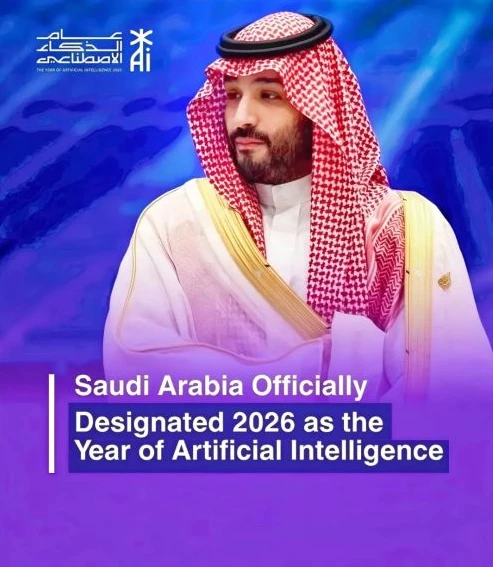
This is more than a slogan; it’s the highest level of national endorsement. Announced during Ramadan and personally overseen by the Crown Prince, the designation adds a layer of strategic urgency and a sense of national mobilization. AI is formally recognized as the core engine for Vision 2030’s transformation from oil dependence to a knowledge-based economy.
Looking back, Saudi Arabia’s AI foundation is remarkably strong:
- Ranked 14th globally in the AI Index (1st in the Arab world)
- Local AI companies have raised nearly $9.1 billion
- Since establishing the Saudi Data and AI Authority (SDAIA) in 2019, it has built a comprehensive strategic framework encompassing ambition, capability, policy, investment, innovation, and ecosystem development
- Recent initiatives include nationwide AI capacity building for the public sector (SAMAI 2), mandatory AI university courses, building the world’s largest government data center, and deploying a national industrial IoT and edge AI network
- The first Arab country to join the Global Partnership on Artificial Intelligence (GPAI), participating in shaping international AI standards and ethics
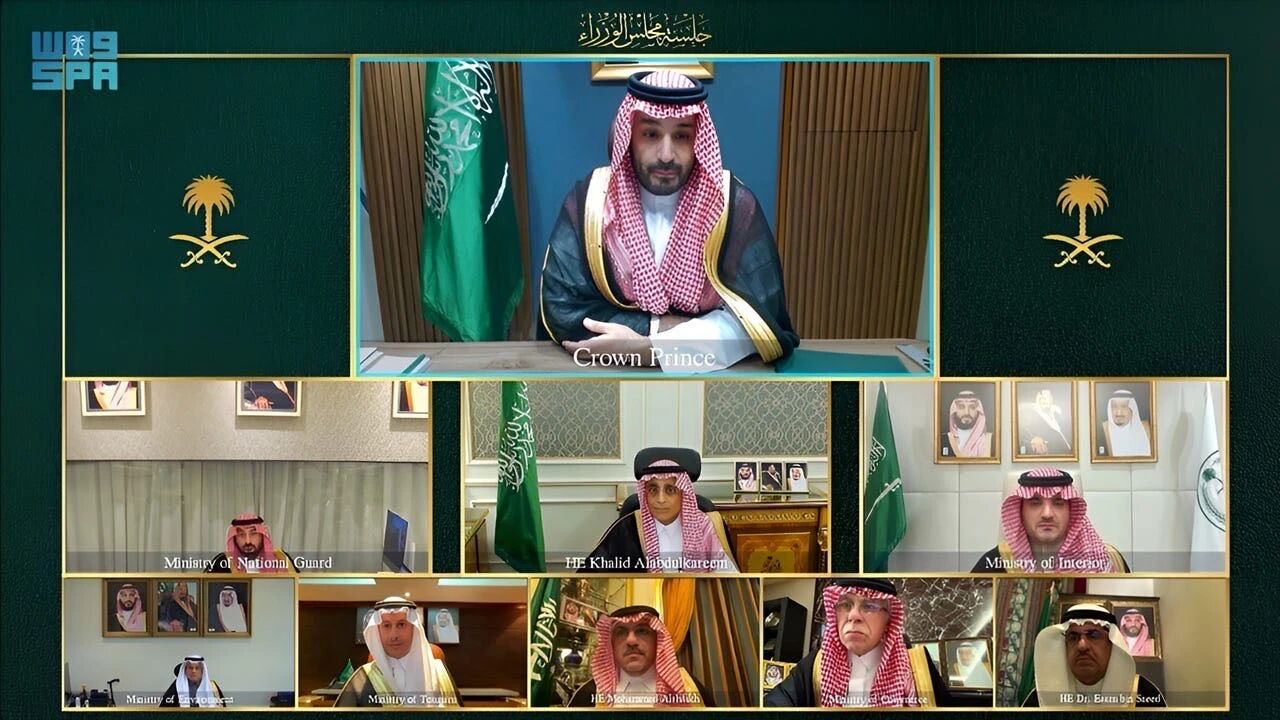
2026: Saudi Arabia’s AI Takeoff
In the coming period, we can expect to see:
- Accelerated training of local talent
- Introduction of supportive policies for businesses
- Deepening international collaborations
- Rapid development of regulatory frameworks
By 2030, AI is projected to make a significant contribution to Saudi Arabia’s GDP.From oil dollars to AI ambition, Saudi Arabia is leveraging its most powerful tools—state-driven vision and massive capital—to execute a bold and decisive leap forward.
Jeddah Expo: Your Optimal Gateway to Capture This Wave
As a professional exhibition organizer deeply embedded in the Saudi market, we have witnessed firsthand the nation’s profound transformation over the past three years. The "Year of Artificial Intelligence" 2026 is not just a national strategy for Saudi Arabia; it represents a prime window of opportunity for global enterprises to enter the Middle East. Jeddah, as the Red Sea gateway and commercial capital, stands at the forefront of this wave of AI infrastructure and digital transformation.
Key Sectors:
- Artificial Intelligence & Big Data
- Smart City Development
- Industrial IoT & Edge Computing
- Digital Infrastructure & Computing Power Partnerships
Why Jeddah?
- Policy advantageswithin the Red Sea Economic Zone
- Billions in active mega-project deployments
- Direct accessto Saudi buyers and partners
- Entry pointto the trillion-dollar Vision 2030 market
In 2026, while the world is focused on Riyadh’s AI ambitions, smart businesses are already positioning themselves in Jeddah for tangible commercial success.This $1.2 billion investment is truly striking. Not just because of the amount, but because the nation once synonymous with oil is now moving faster than almost anyone else. Are you ready to capture this wave in Jeddah?
