
Over the past two months, almost every foreign trader doing business in the Middle East has been tormented by the same question: How do we get our goods into the Gulf?
The Strait of Hormuz’s navigability has plummeted. Freight rates have doubled, shipping schedules are out of control, and insurance costs have skyrocketed. Businesses are being forced to do something they’ve never seriously considered before—re-evaluate the economic and security calculus of every alternative route.
Let’s break it down, one by one.
01 A Logistics Common Sense Being Rewritten
For the last two decades, there was only one golden rule for Middle East trade: go through the Strait of Hormuz, call at Jebel Ali, and radiate out to the Gulf. That route was the cheapest, fastest, and most mature.
Until a conflict in late February 2026 rendered that rule obsolete overnight. The Strait’s capacity dropped sharply; shipping lines slapped on war risk surcharges (as high as $2,000 per container); Lloyd’s redefined the high-risk zone to exclude Oman and the UAE—and insurers themselves were reluctant to cover.
So all traders simultaneously opened their maps and started hunting for a second route.
02 Route One: UAE’s East Coast (Khor Fakkan & Fujairah) – The Closest Yet the Most Expensive
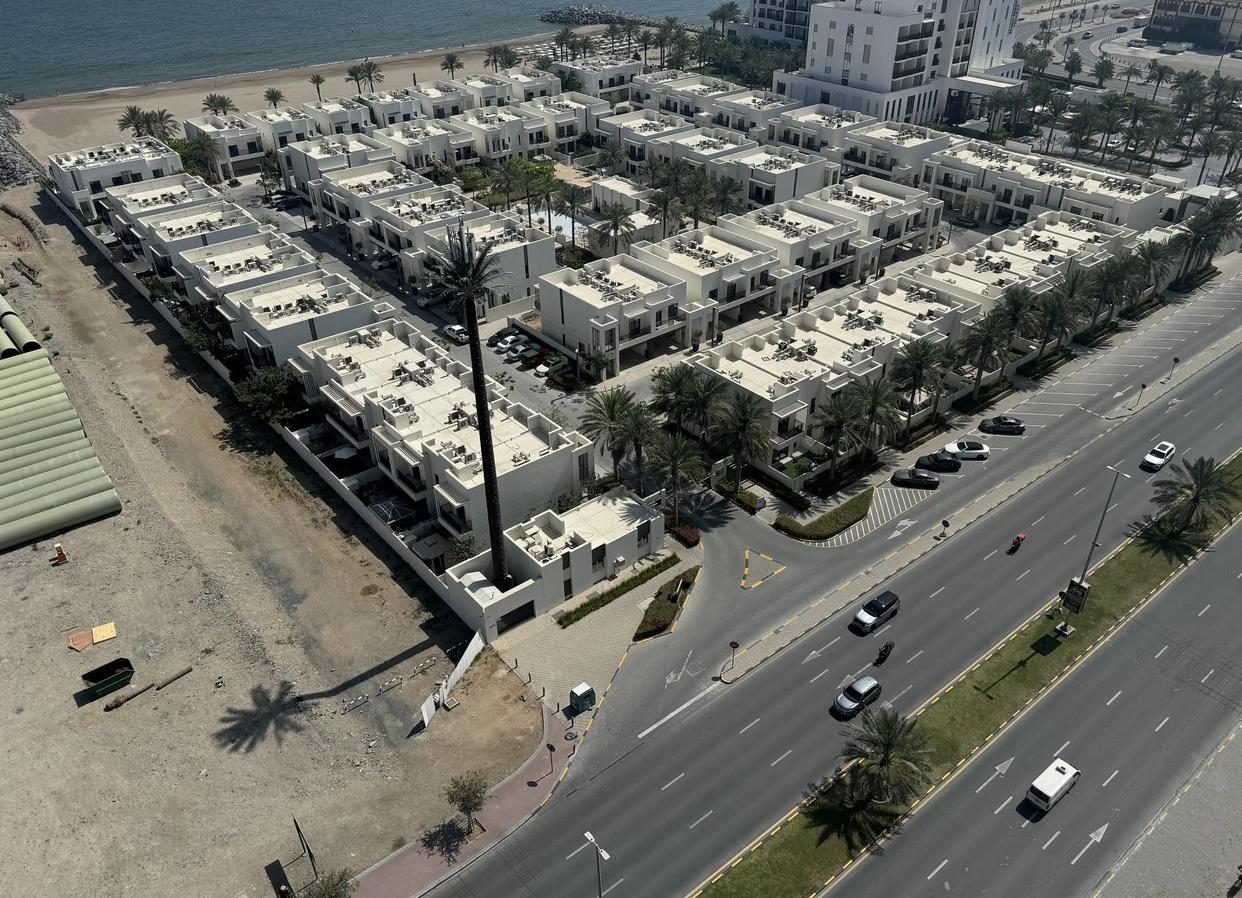
From a distance perspective, Khor Fakkan and Fujairah have an obvious advantage: they are only about 130 km by road from Dubai. But precisely because of that “closeness,” everyone rushed there, leading to saturated anchorage and long truck queues at the terminals. In economic terms, this is a “tragedy of the commons”—each seemingly rational individual choice adds up to a collective disaster.
The numbers tell the story better: current waiting times are 5–10 days, compared to just 0.5 day in normal times. The total cost for a 40-foot container has soared to $9,000 - 11,000, whereas before the conflict it was around $3,500. Security assessment is equally grim: both ports lie within Iran’s missile range and are already listed by Lloyd’s as high-risk zones.
$11,000, which is three times more expensive than before, and there is also the risk of being attacked. After doing the math, many cargo owners simply give up: rather than spending 11,000 on a high-risk route, they would rather take a few extra days to take a safer route."
This route is only suitable for high-value, time-sensitive cargo that can tolerate high costs. For ordinary exhibits and general trade, it’s not advisable to force your way through.
03 Route Two: Oman (Salalah & Sohar) – Safe but Too Far
The rise of Omani ports looks dramatic. Windward Maritime data shows that Sohar Port saw a 1,766% increase in destination change requests, and Salalah an 800% increase. But numbers can deceive—low bases make the percentages look huge.
The real problem is that Omani ports are designed for transshipment, not for serving the interior of the Gulf. Land distance from Salalah to Dubai is about 1,700 km; to Jeddah it’s even further at 2,400 km. Trucking a 40-foot container costs 3,000–3,000–5,000, whereas inland drayage from Jebel Ali in normal times was only 200–200–400. That differential can eat up any savings on ocean freight.
On security: Salalah and Sohar are relatively far from the Strait of Hormuz, but land transport requires crossing uninhabited areas—risks that cannot be ignored.
If your market is already East Africa or South Asia, Salalah is a decent choice. But if your destination is Saudi Arabia or the UAE, think carefully.
04 Route Three: Jeddah (Jeddah Islamic Port) – Used to Be Considered Too Far, Now It’s Truly Attractive
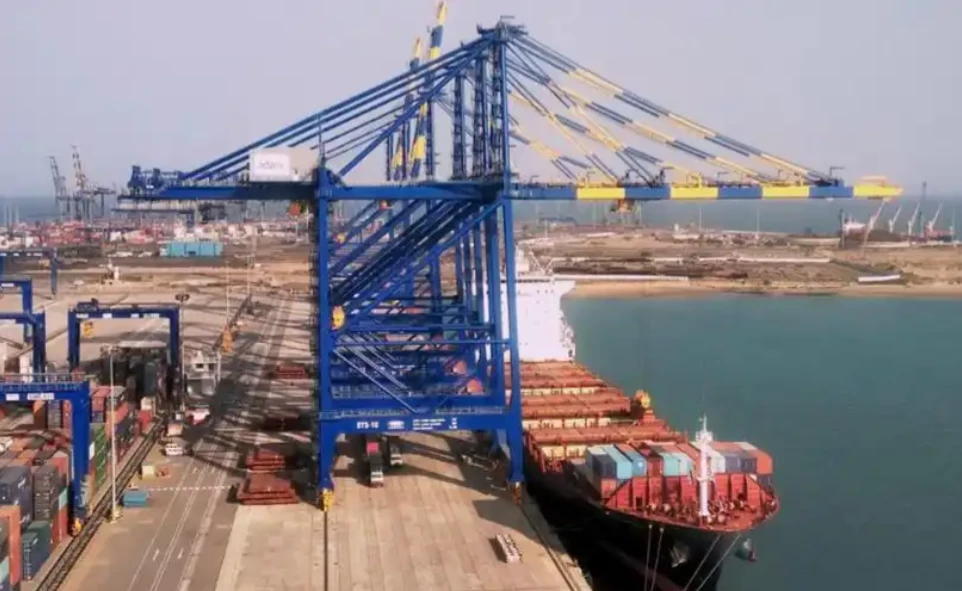
In the past, Jeddah was dismissed because hauling by land across Saudi Arabia from Jeddah to Dammam is about 1,300 km, and to Dubai about 1,350 km—that distance was “too far.” But that comparison was made when the “Strait direct to Jebel Ali” route was still working. Now that route is paralyzed, and the alternatives are Khor Fakkan (7-day wait + $11,000 + high risk) and Salalah (1,700 km land haul with even higher trucking costs). In this new coordinate system, Jeddah’s 1,300 km no longer looks like a drawback; it becomes an “acceptable price.”
More importantly, Jeddah’s land connections are more mature than many realize. Saudi Arabia has been pushing its “Landbridge” plan for years. The east-west highway network is dual carriageway, even six lanes in places, and the trucking system is relatively regulated. Although the Riyadh–Dammam rail link isn’t fully operational, freight trains are already handling part of the capacity.
Let’s look at the data: Jeddah Islamic Port has an annual throughput capacity of over 100 million tonnes, and its South Container Terminal can handle 4 million TEUs. Trucking cost for a 40-foot container from Jeddah to Dammam is about 1,200–1,200–1,800. On security, Jeddah is outside the Strait of Hormuz blockade zone. While the Red Sea’s Bab el-Mandeb Strait still carries risks, they are relatively manageable.
Jeddah’s “rising star” status is no accident—it is the inevitable outcome of recalculating the economic equation under extreme conditions.
But here’s something even more telling: Jeddah Port hasn’t spent a penny on promotion.
No roadshows, no overseas warehouse briefings, no ads in trade media. Simply because the Strait of Hormuz route became impassable, tens of thousands of traders, logistics providers, and shipping lines simultaneously opened their maps and discovered Jeddah. Overnight, it went from “the last of the alternatives” to a buzzword in foreign trade chat groups. This “passive fame” is more thorough and more effective than any proactive marketing campaign could have been.
05 Deeper Thinking: What Does Jeddah’s “Passive Rise” Reflect?
Many attribute the current buzz around Jeddah Port to “temporary traffic from the crisis.” But we see it differently: this is an irreversible shift in the Middle East logistics landscape.
For the past two decades, global supply chains had only one belief: efficiency first. Ports, routes, and inventory were all designed around “fastest and cheapest.” The Strait of Hormuz was the pinnacle of that logic—a strait just 33 km wide at its narrowest, carrying 30% of the world’s seaborne oil trade.
But in 2026, that logic was shattered. The weight of security has overtaken efficiency for the first time. Companies are willing to pay a premium for certainty: rather than waiting seven days outside the Strait, they’ll go an extra 1,300 km by road; rather than risk a denied insurance claim, they’ll pay $1,000 more in freight.
Jeddah’s rise is essentially a landmark event of this new “security-first” era. It didn’t happen because Jeddah became better, but because the other routes became worse. Once Jeddah is integrated into the mainstream supply chain network, it won’t be easily discarded.
For exhibitors, this means: even if the Strait is restored in the future, the route from Jeddah Port straight to the exhibition hall is worth keeping as a regular option. It’s no longer a “backup”—it’s a parallel corridor.
No one can predict when the Strait of Hormuz congestion will end. But one thing is certain: your exhibits must arrive on time at the exhibition hall in Jeddah.
We can’t change geopolitics, but we can reserve your booth, coordinate onsite services, and connect you with local logistics resources—so you don’t have to fight the freight battle alone.
We’ll be waiting for you in Jeddah.
And now, only one step remains: formally put Jeddah on your exhibition participation form.
