
When people talk about Saudi Arabia, all eyes are on the glossy mega projects: NEOM, the Expo, metro lines, and data centres.
Yet, beneath this global wave of construction, three massive, less competitive, and reliably paid hidden tracks are being quietly captured by savvy Chinese companies. They rarely make headlines, but they represent the most real and rigid demands of the Saudi market.
In this article, we will push open these three overlooked doors and take a closer look.
The “Crown” a Kilometre Above Ground – Jinggong Steel Building Group Wins the Core Section of Jeddah Tower
Recently, Jinggong Steel Structure’s subsidiary, Jinggong International, delivered good news: it has won the bid for the main steel structure above the 120th floor of Saudi Arabia’s Jeddah Tower. With this, Jinggong International has secured the entire supply and installation contract for all main steel structures of this future world’s tallest building.
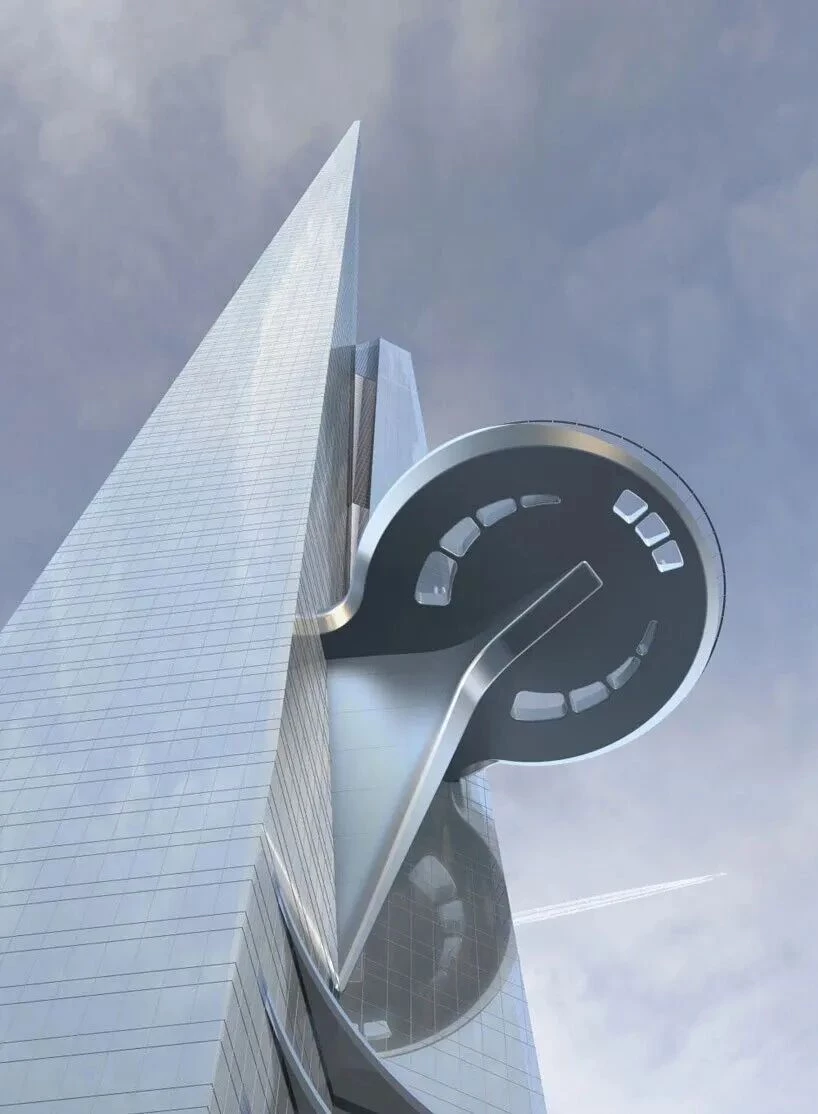
Jeddah Tower, with a design height of 1,008 metres, will surpass the Burj Khalifa to become the world’s first kilometre‑scale landmark. Its restart and progress are a powerful symbol of Saudi Vision 2030.
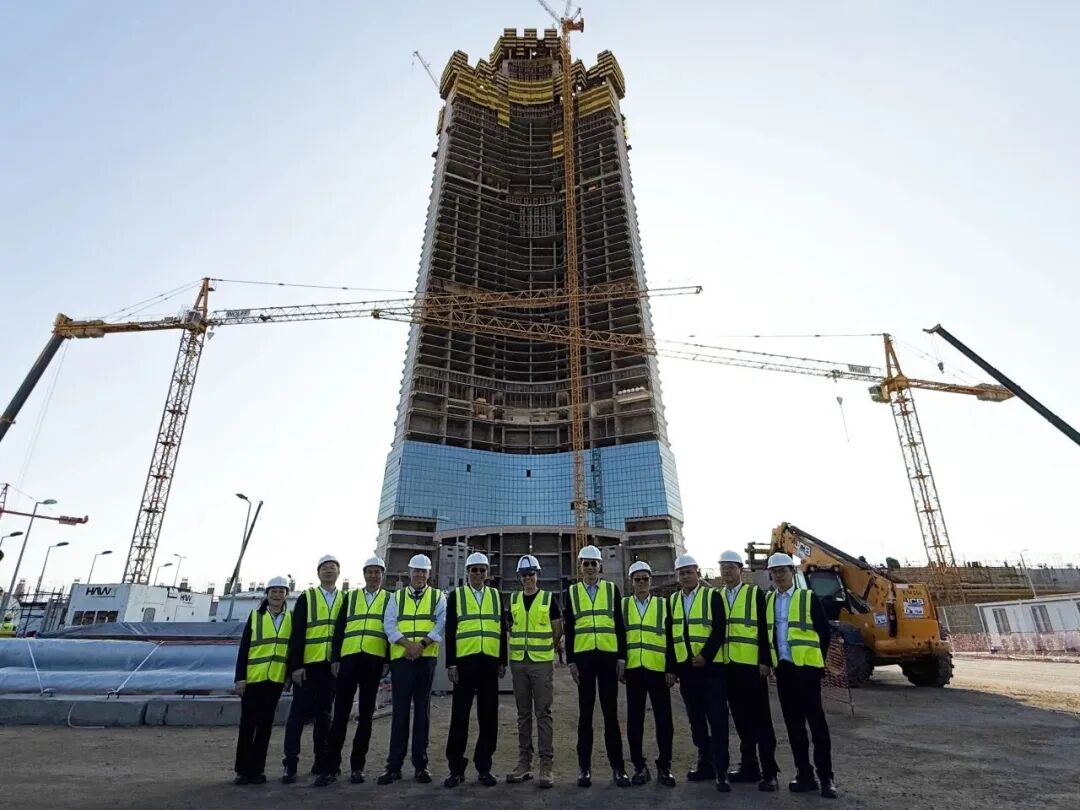
Why is this section “unusual”?
Above the 120th floor is a true testing ground for technical excellence. Near the top, the structural tapering, equipment floors, maintenance systems, and façade geometry are extremely complex, demanding world‑class capabilities in detailed design, manufacturing precision, and on‑site installation.
Jinggong International’s return to this core section after years of project suspension proves that its track record, technical strength, and organizational capacity have earned high recognition from the client. For any engineering firm, being part of the world’s tallest building is a top‑tier “passport” to the international high‑end construction market. For any future ultra‑high‑rise, stadium, or airport project in the Middle East, Jeddah Tower will be a powerful reference.
A $15 Billion Healthcare Blue Ocean – Barely Touched by Chinese Building Material Companies
Just two weeks ago, the globally respected firm Research & Markets released a seriously under‑reported report: the Saudi hospital construction market is currently worth $15 billion.
This is a construction market larger than Expo 2030, with more stable payments than residential projects, and higher technical barriers than renewable energy. And right now, in this blue ocean, Chinese building material companies are almost invisible.
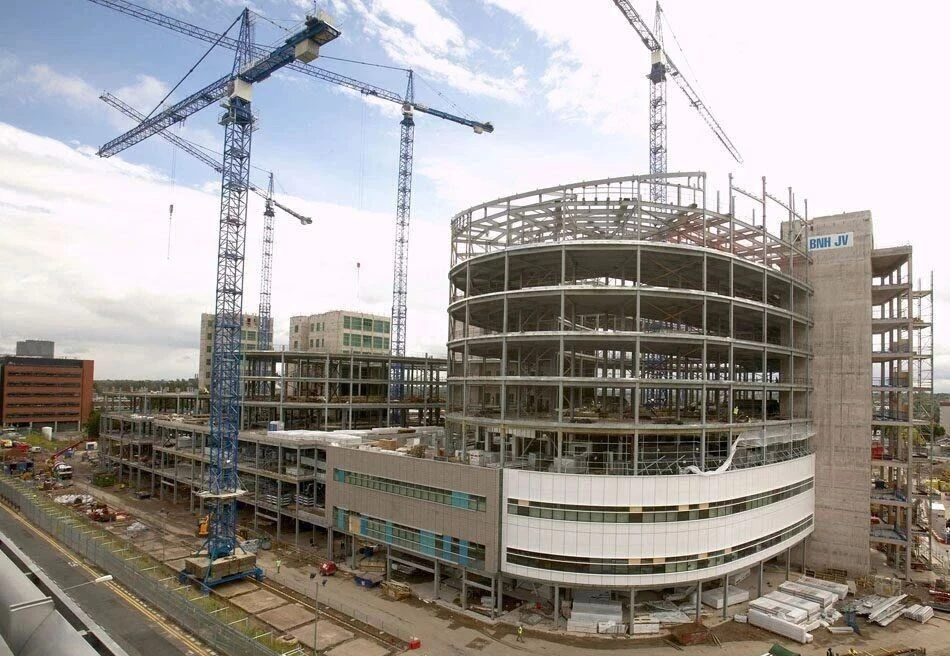
Hospitals demand the most stringent building materials.
- Flooring:antibacterial, anti‑static, seamless, chemical‑resistant …
- Walls:scrubbable antibacterial paint, air-tightness, lead shielding for radiation protection …
- Systems:medical gas systems (copper pipes), clean room HVAC (HEPA filters), pneumatic tube systems …
These are not ordinary materials; they are high‑barrier specialty products. Once you are on the supplier list, you create a moat that is hard to cross.
What is more critical: payment security. The Saudi government has already allocated $13.3 billion in special funds for healthcare infrastructure. PPP contracts run 20‑30 years, with the payer being the highly creditworthy Ministry of Health or the National Health Service. This is not a one‑off sale but a 20‑year stream of recurring consumables.
Opportunity checklist:
- Flooring:PVC sheet, rubber flooring, conductive flooring (total demand exceeds hundreds of millions of dollars)
- Wall systems:clean room colour‑coated steel panels, antibacterial paint, lead sheets (Chinese products are just one‑third the price of Western equivalents)
- Medical gas copper pipes:EN13348 compliant – Hailiang, Jinlong Copper, etc. have production capability
- Clean room HVAC consumables:HEPA filters – huge annual replacement demand

$25 Billion in Education Infrastructure – Prefabricated Schools, the Answer Already Written
Saudi Arabia plans by 2030 to build: 1,200 new private schools, 1,900 kindergartens, and add 800,000‑900,000 university places. The materials procurement alone exceeds $25 billion.
But conventional construction simply cannot meet this pace – building one school in 18‑30 months would leave most unfinished by 2030.
Saudi Arabia’s official solution: prefabricated construction.
And the world’s largest producer of prefabricated buildings is China.
Prefab school buildings are no longer “temporary shacks”. Modern modular schools use light‑gauge steel frames, with a design life of over 50 years, meeting Saudi seismic and thermal insulation standards. They can look identical to traditional buildings, while cutting construction time by 60‑70% – delivering a school in 6‑8 months.
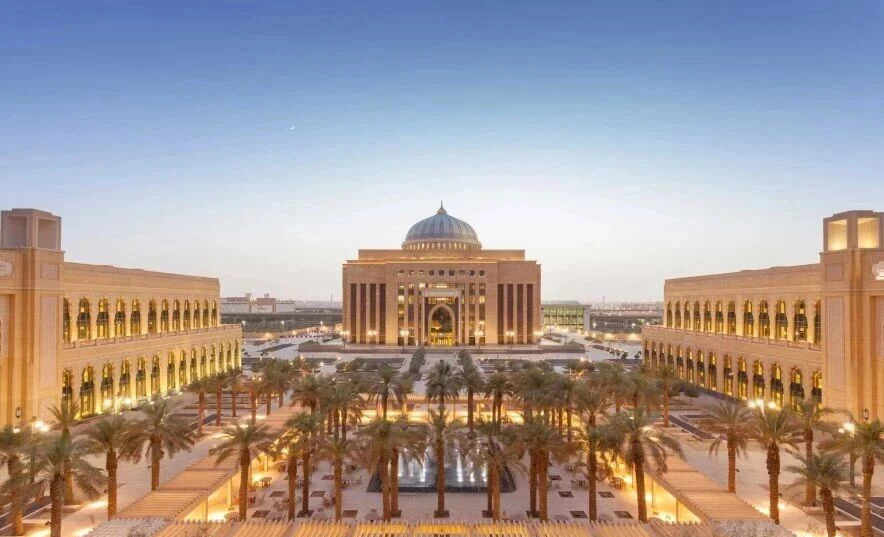
Breaking down a school’s material list:
- Light steel keels:600,000 tonnes total demand – about $480 million
- Sandwich panel enclosure system:4 million square metres – about $500 million
- Smart classroom infrastructure:$330 million (interactive whiteboards, integrated cabling)
- School‑specific furniture:$250 million
- Sports facilities, water‑saving systems, etc.:hundreds of millions more
China is the world’s largest producer for nearly all these categories, with a complete industrial chain and strong price competitiveness.
The smart way in now: become a turnkey modular school solution provider, or establish approved material agreements with international school brands (e.g., Reigate Grammar School, King’s College School). Once you are on their Approved Materials List (AML), you bypass all local price wars.
PowerChina Sets a New Record for Middle East Gas Turbines
Beyond the three tracks above, one more piece of news from the power sector deserves attention:
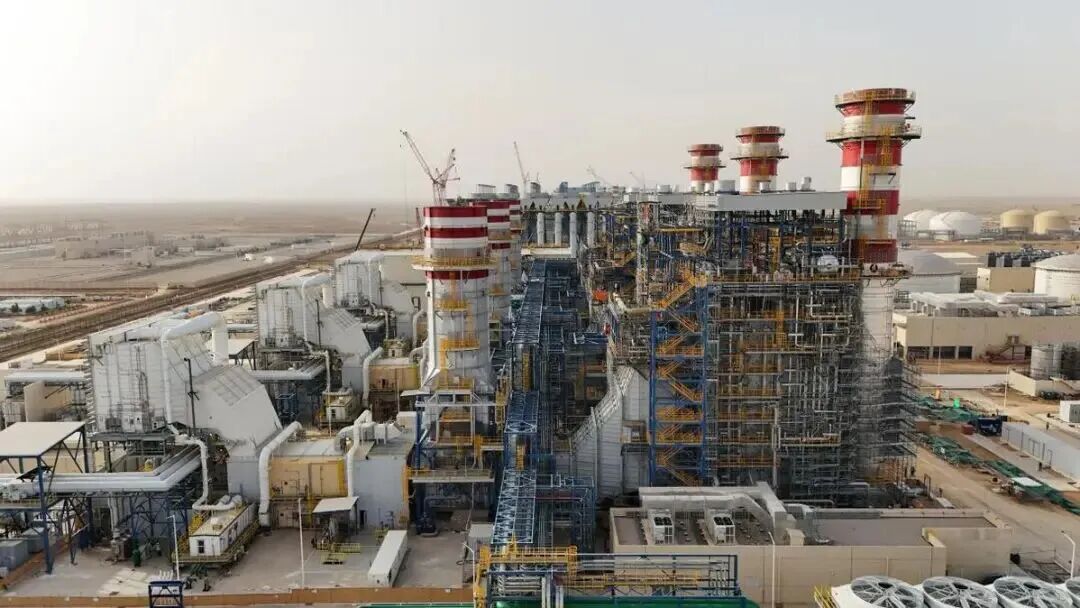
On May 8 local time, SEPCOIII Electric Power Construction Co., Ltd. successfully connected the GT11 units of the Saudi Qassim and Taiba EPC projects to the grid, achieving the first grid connection in the Middle East for the world‑leading 7HA.03 gas turbine.
Each project has an installed capacity of 1,800 MW, making them core projects of Saudi Arabia’s energy transition strategy. From contract signing in the first quarter of 2024 to grid connection, they have demonstrated exceptional project coordination and execution capabilities. This is not only a milestone for SEPCOIII, but also a vivid illustration of deepening China‑Saudi energy cooperation.
The Window Is Open – Opportunity Belongs to the Movers
Over the past six months, we have reviewed seven mainstream construction tracks in Saudi Arabia: mega projects, housing, urban rail, renewables, data centres, healthcare, and education.
Among these, healthcare and education are the two blue oceans with the lowest Chinese participation but the strongest rigid demand.
- Hospital building materials have a powerful “approved brand” effect – once you are on the AML, you have a moat that is hard to cross for years.
- Prefabricated solutions for education infrastructure are exactly where China’s manufacturing excels globally.
Right now, Saudi Arabia’s regulatory, financial, and project windows have just opened at a historic moment. And the rarity of this moment is that there are not many competitors – first‑mover advantage can translate into a market leadership position for years.
The key step forward is right in front of you.
