
Even amid the volatile geopolitical situation in the Middle East, Saudi Arabia continues to accelerate the building of a more resilient energy future with remarkable resolve and financial strength, staying firmly on track toward its Vision 2030.
A view that "the Middle East is on the cusp of a new energy boom" has sparked intense discussion in industry circles recently. Its core logic is straightforward and incisive: the vulnerability of centralized power grids was fully exposed during the Ukraine crisis. For the Middle East, should geopolitical conflicts escalate, power grids would become the most vulnerable targets.
The solution lies in distributed renewable energy power stations—solar and wind projects spread across the country like countless capillaries. If one is destroyed, thousands remain operational; if one section is paralyzed, the entire system continues to function.
This logic is now being rapidly put into practice across Saudi Arabia.
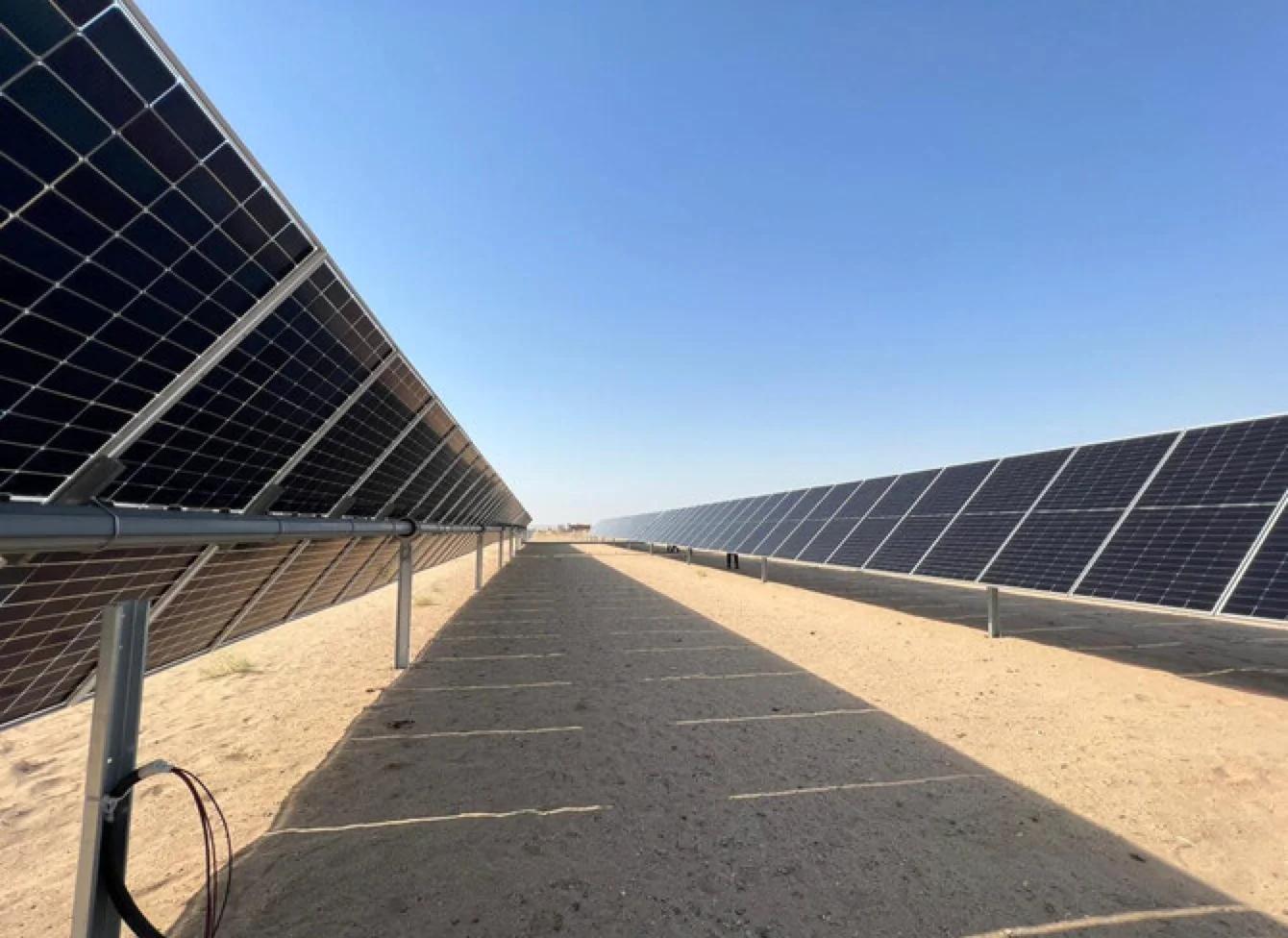
Hundred-Billion-Dollar Tenders by Saudi Arabia’s Grid Giant
Just recently, Saudi Energy (formerly Saudi Electricity Company, SEC) officially launched bidding for a series of 380kV substation and overhead transmission line projects spanning the entire kingdom:
- Western Region: Wind power booster stations at Ashayrah and Mozeraah, as well as photovoltaic (PV) booster station and grid connection works at Mastura;
- Southern Region: Wind power booster stations at East Al-Amoah and North Asir;
- Central Region: Multiple PV and wind power booster stations and transmission line projects at Tumair, Al-Majmaah, NIFI, Starah, and others.
This is not an isolated move. According to statistics, in 2025 alone, the total value of awards granted by Saudi Energy for substations, underground cables, and overhead transmission lines reached $15 billion.
Seventh Round of Expansion by the National Power Procurement Platform
Meanwhile, the Saudi Power Procurement Company (SPPC), Saudi Arabia’s national power procurement platform, has released the Request for Proposal (RFP) for the seventh round of the National Renewable Energy Program (NREP), with a total installed capacity of 5,300 MW, covering:
- PV projects: Tabarjal 2 (1,400 MW), Mawqaq (600 MW), Tathleeth (600 MW), South Al Ula (500 MW);
- Wind power projects: Bilghah (1,300 MW), Shagran (900 MW).
With large-scale upgrades to grid-supporting infrastructure on one side and frequent releases of renewable energy generation projects on the other, Saudi Arabia’s new energy strategy is characterized by a dual-wheel drive and steady pace.
Why Can Saudi Arabia Stay Its Course Amid Turmoil?
From attacks on Ukraine’s power grid to ongoing tensions in the Middle East, the security risks facing global energy infrastructure are being re-evaluated. Saudi Arabia’s response is not impromptu, but part of a long-planned strategic blueprint.
First, certainty in top-level design. Since its launch, Saudi Vision 2030 has served as the anchor of national strategy. Energy transition, economic diversification, and enhanced grid resilience have long been embedded in national development agendas and will not waver due to short-term external changes.
Second, backing from strong capital strength. Unlike many countries with constrained new energy budgets, Saudi Arabia boasts substantial sovereign wealth funds and stable oil and gas revenues, capable of supporting annual investments in renewable energy infrastructure worth tens of billions of dollars.
Third, mature institutional mechanisms. SPPC’s unified procurement model as the sole off-taker, combined with Saudi Energy’s coordinated development of grid assets, gives Saudi Arabia significant advantages in project execution efficiency, standardization, and risk control.
From Vision to Reality: Saudi Arabia Enters Its Prime Window of Opportunity
For new energy industry chain enterprises, the Saudi market is currently experiencing an unprecedented golden window marked by a rare combination of scale, certainty, and payment capacity.
- Scale: Covering everything from 380kV transmission networks to 5,300 MW generation projects, including PV, wind power, booster stations, outgoing lines, energy storage, and more;
- Pacing: Clear timelines for project tendering, awarding, and construction, with predictable annual plans;
- Payment: Backed by national-level buyers, ensuring secure payments and strong funding guarantees.
All this points to a core conclusion: in Saudi Arabia, new energy is no longer an option but a necessity—not a future plan, but ongoing engineering.
How to Deeply Engage with Saudi Arabia’s New Energy Market?
The boom in Saudi Arabia’s new energy market is reflected not only in the volume of national-level tenders but also in the full industry chain demand from power generation to grid side, from equipment supply to engineering, procurement, and construction (EPC). For Chinese enterprises, the keys to seizing market opportunities are precise market entry, meeting localization requirements, and establishing partnerships with local Saudi developers and grid companies.
To help Chinese enterprises efficiently connect with Saudi Arabia’s new energy and infrastructure markets, we invite you to attend the following high-profile exhibitions in Jeddah, Saudi Arabia, to engage directly with project owners, purchasers, and partners.
JEDDAH INT’L BUILDING EXHIBITION
Focus Areas: Building materials, hardware & tools, smart homes, kitchen & bathroom ceramics, HVAC, lighting & electrical equipment, construction machinery, etc.
Dates: September 15–17, 2026
WORLD TRADE EXPO SAUDI
Focus Areas: Building materials & construction machinery, industrial equipment, renewable energy, power & electrical products, building & home furnishings, consumer electronics & home appliances, food & equipment, auto parts & accessories, textiles, leather & daily consumer goods, etc.
Dates: December 1–3, 2026
Both exhibitions are strongly supported by the Saudi local government, chambers of commerce, and major buyers, serving as premium platforms for entering the Saudi market and accessing genuine buyers and project resources. Whether seeking supporting orders for new energy projects or expanding local channels for building materials, power equipment, engineering services, and other sectors, they present a valuable opportunity to deeply connect with the Saudi market.
Conclusion
While the world’s attention is fixed on geopolitical turmoil, Saudi Arabia is writing its own transition story through tender announcements, booster stations, and solar panels. This combination of strategic resolve and execution speed represents one of the most noteworthy forces in today’s global new energy market.
Together with you, we will continue to deepen our presence in this dynamic market.
