
The World Cup is not just a football tournament; it is an ultra‑long‑term national construction purchase order. Football fans watch the goals, but business minds read the materials list.
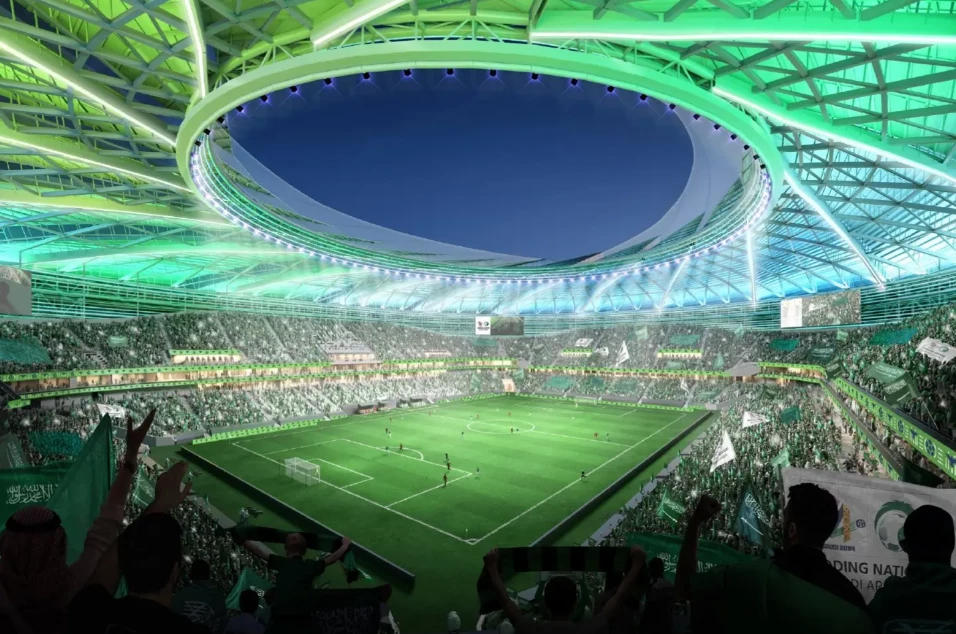
On April 16, 2026, the Saudi Ministry of Sport issued a pre-qualification invitation for the King Salman International Stadium. Set to host the opening ceremony and final match of the 2034 FIFA World Cup, the 92,000-seat venue will be the largest stadium in Saudi Arabia's history and one of the most iconic architectural landmarks in the Middle East over the next decade.
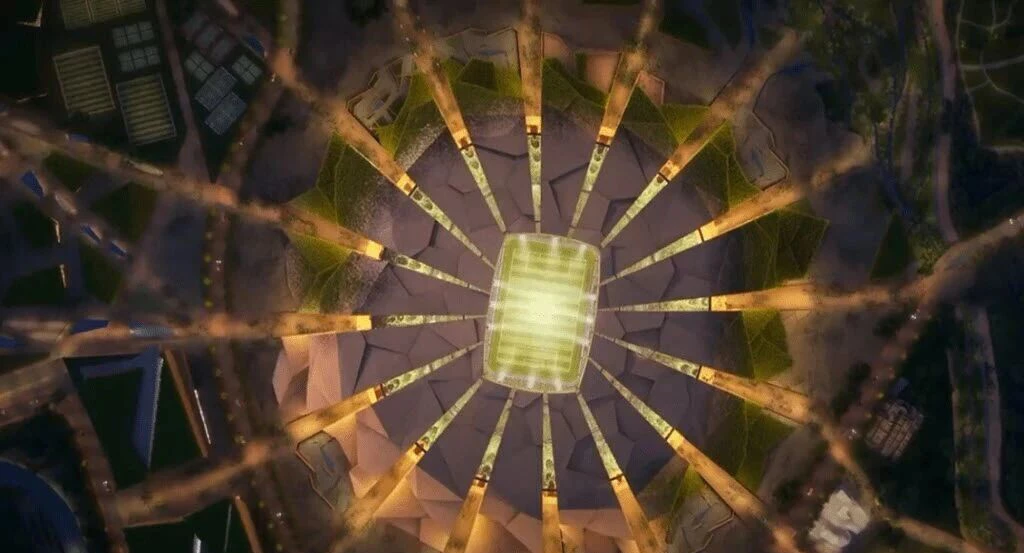
But this is just the starting point. The 15 stadiums for the 2034 World Cup will be distributed across five host cities – Riyadh, Jeddah, Al Khobar, Abha, and NEOM – supported by 132 training sites, 73 player accommodation centers, airport expansions, and extensive transport and hotel infrastructure. Preliminary industry estimates place total World Cup‑related construction at over USD 20 billion, with some projections reaching as high as USD 30 billion. This is not a sporting event – it is a multi‑billion‑dollar construction program that is already taking effect.
Who Is Reading This Contract? Who Is Acting?
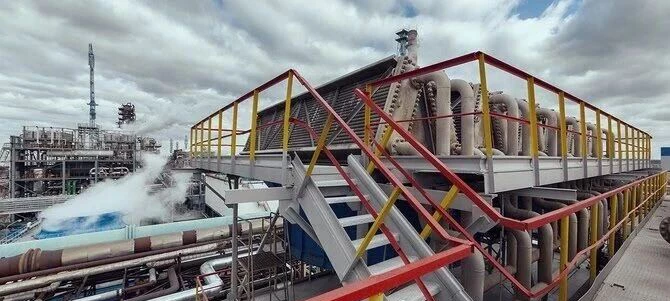
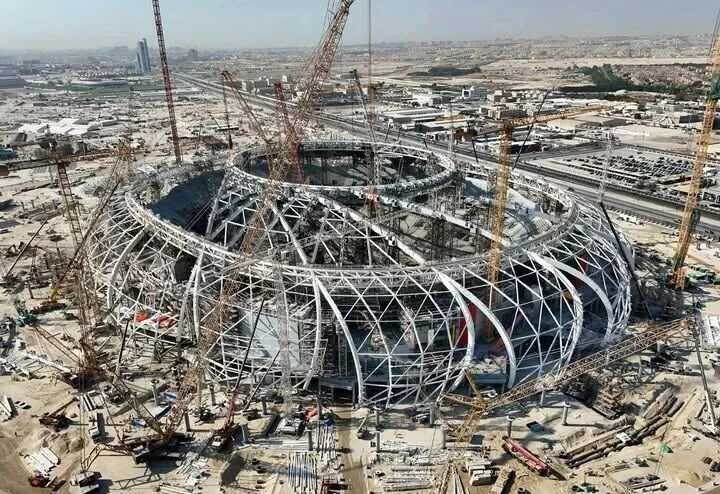
Steel structures are the heaviest category in this order. The total steel consumption for the 15 stadiums exceeds 1 million tonnes – the Jeddah Central Development Stadium alone has a gross floor area of 360,000 m², equivalent to 50 standard football pitches. Chinese companies have already secured key contracts:
- Jinggong Steel Structuresigned a RMB 550 million contract in 2025 for the Jeddah Stadium and surrounding sports village. The total construction area is about 500,000 m², with the main load‑bearing structure using a “well‑shaped” frame composed of four giant monolithic trusses, achieving a maximum span of 218.4 meters. Previously, Jinggong also participated in the Lusail Stadium (Qatar World Cup 2022) and the Aramco Stadium in Saudi Arabia.
- MCC Steel Structurewon a contract for the Prince Mohammed bin Salman Stadium in Qiddiya (packages 1‑10), with a total construction area of about 260,000 m² and a capacity of 45,000 seats.
Air conditioning and cooling equipment are equally critical. Summer temperatures in Saudi Arabia exceed 45°C, with surface temperatures reaching 60°C, but FIFA requires the pitch temperature to be kept at 22‑24°C. That is a cooling challenge of 22 degrees. For the 2022 Qatar World Cup, the cooling system capacity for a single stadium reached 183.5 MW. For Saudi’s 15 stadiums, industry insiders estimate total cooling demand at over 2,600 MW. Chinese manufacturers such as Gree, Midea, Haier, and Hisense have the technical capability to supply large‑scale centrifugal chillers and district cooling systems.
Membrane structures, LED screens, stadium seats, power generators – each category represents millions or even hundreds of millions of dollars in procurement opportunities.
Entering Now – Not Too Late, but the Window Is Closing
The preferred entry path is to establish cooperation with local Saudi building materials trading agents, as dealing directly with Saudi project owners is far more difficult than expected. Meanwhile, construction trade shows in Saudi Arabia are the most effective way to build face‑to‑face relationships.
Saudi Arabia currently has a total construction project pipeline of US$1.3 trillion. The 2034 World Cup is just one part of that – but it is the most certain and the most time‑sensitive part.
In July 2034, when the final kicks off under the gaze of 92,000 spectators at the King Salman International Stadium, more than 5 billion viewers worldwide will watch the live broadcast. Every steel beam, every chiller, every seat will carry more than just the weight of a building.
This is a construction certificate broadcast globally, embedded silently in every bolt of those structures. The Chinese men’s national football team may still be preparing for the next tournament – but Chinese materials and equipment have already entered the field a decade early.
September 2026 – Jeddah Int’l Building Exhibition
Your window is here.
