
Market Size: Nearly 1 Million Vehicles Imported Annually, Steadily Among the Global Top 20
Saudi Arabia is one of the world's most important automotive markets. With an underdeveloped public transport system, urban and intercity travel relies heavily on private cars – nearly every household owns one or more vehicles.
Import volumes remain consistently high. In 2024, Saudi Arabia imported approximately 940,000 vehicles; in 2025, that figure reached about 960,000. Over the past two years, cumulative imports totalled roughly 1.9 million vehicles, firmly placing Saudi Arabia among the top 20 global automotive markets.
Vehicle sales account for over half of Saudi Arabia's total domestic sales, making it the largest automotive market in the Gulf region.
According to forecasts, Saudi vehicle sales will grow at an average annual rate of 5.3% over the next decade, with sales expected to reach 1.66 million units by 2034.
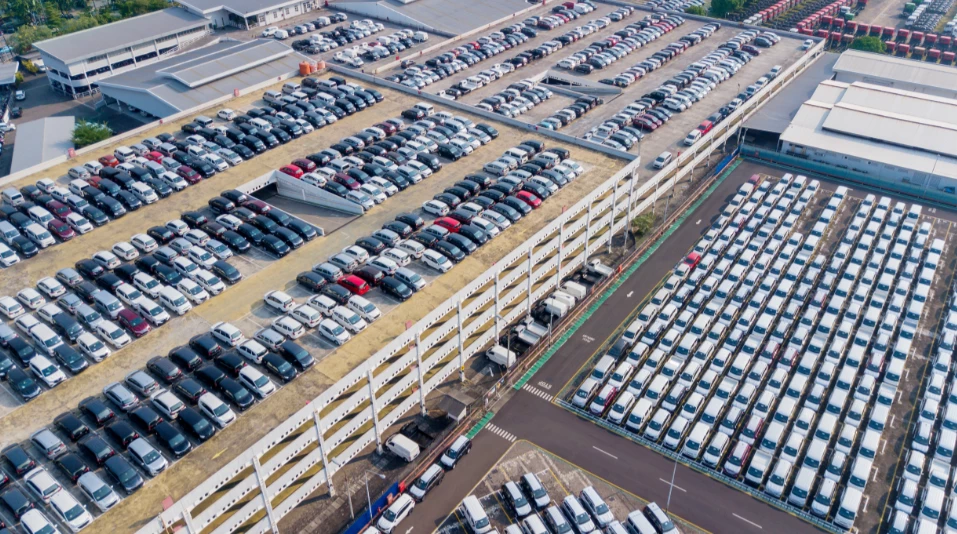
Competitive Landscape: China Surpasses Japan to Take First Place, the U.S. Drops to Sixth
The brand landscape of the Saudi automotive market is undergoing a historic reshuffle.
China has overtaken Japan to become Saudi Arabia's largest source of vehicle imports. Japan now ranks second, followed by India, Thailand, and South Korea, while the United States has fallen to sixth place with a significantly declining market share.
Chinese brands' market share is rising rapidly. Although Japanese and Korean brands have dominated for decades, Chinese automotive market share is growing at 10%–15% annually and is expected to exceed 120,000 unit sales in 2026.
Data from the first half of 2025 shows total Saudi vehicle sales of 412,920 units, with Toyota leading at 118,022 units (approximately 28% market share); Hyundai and Kia combined for 96,160 units (23%); and Chinese brands collectively accounted for 47,728 units, reaching an 11.6%–12% market share. Changan and MG have already broken into Saudi Arabia's top‑10 sales rankings, while Jetour achieved a remarkable 75.5% year‑on‑year growth in February 2025 alone.
Consumer perception is undergoing a fundamental shift. A few years ago, Chinese cars were seen as the "budget choice" for a niche group of buyers; today, they are "major market contenders." Saudi consumers particularly appreciate Chinese vehicles for their exterior design, technology features, and new energy capabilities.
Policy Drivers: Local Manufacturing Wave Under "Vision 2030"
Saudi Arabia is transforming from a car‑consuming nation into a car‑manufacturing nation.
Under Vision 2030, Saudi Arabia aims to build 3–4 major automakers by 2030, achieving an annual production capacity of 400,000 vehicles with 40% local content, and positioning itself as the Middle East's automotive manufacturing and export hub. In the new energy sector, the "Double‑30" strategy sets targets of 30% for new energy vehicle (NEV) share and 30% for annual EV production by 2030. Additionally, the government plans to electrify 30% of all vehicles in the capital, Riyadh, by 2030.
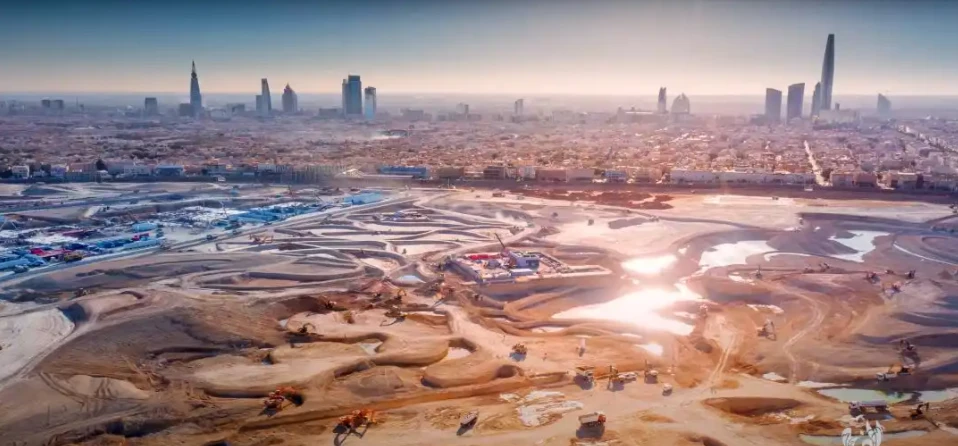
The core vehicle – King Salman Automotive Park. Located within the King Abdullah Economic City (KAEC) special zone, the park has already attracted multiple international automakers: Ceer (Saudi's first home‑grown EV brand, in partnership with Foxconn); Lucid Motors, which opened its first international factory in 2023; Hyundai Motor, which plans to start production at its first Middle East manufacturing base (50,000 units/year) in Q4 2026; and Stellantis, among others.
Supply chain supporting facilities are also accelerating. In 2026, MASARAT Mobility Park partnered with TASARU Supplier Hub to bring in global Tier‑1 suppliers to serve Ceer, Lucid, and other OEMs. FPI Gulf will also build a component manufacturing base within the park. The project is expected to contribute approximately $25 billion to Saudi GDP by 2035.
01 Rapid Growth of the EV Market
Although EV penetration in Saudi Arabia is still low (approximately 2.34% in 2024), growth has been explosive – from just thousands of units in 2022 to 24,300 units in 2024, a year‑on‑year increase of 46.92%.
02 Active Presence of Chinese Brands
BYD entered the Saudi market in 2023 and has already opened 3 showrooms, with plans to add 7 more stores by the second half of 2026. GAC's two NEV brands, AION and HYPTEC, have officially launched in Saudi Arabia, introducing three all‑new models. Geely, Changan, MG, and other brands are also actively expanding their new energy presence.
03 Policy Incentives
Saudi Arabia offers purchase subsidies of up to 15% for new energy vehicles, along with preferential land and electricity tariffs. The growth trajectory of Chinese NEVs is highly aligned with Saudi Arabia's sustainable development goals under Vision 2030.
Exhibition Opportunities: Three Practical Levers
As the organiser of the Saudi Jeddah exhibition, the above market trends provide us with clear strategic directions.
01 The NEV Explosion Window: Exhibition Platform Value on the Rise
Saudi Arabia's EV market is on the cusp of a boom – with 46.92% annual growth and subsidies of up to 15%, this is the prime window for exhibition demand. Chinese brands (BYD, GAC, Geely, etc.) are accelerating their NEV expansion in Saudi Arabia; they urgently need a platform to directly engage Middle Eastern buyers and establish local partnerships – and we are the provider of that platform.
02 Strong Exhibition Participation Demand from Chinese Companies
China has surpassed Japan to become Saudi Arabia's largest import source, with market share growing 10%–15% annually. Chinese automotive supply chain companies have a strong need to exhibit – they need exhibitions as a springboard into the Middle East market. Chinese exhibitors are our core client base; we can focus on attracting Chinese brands, create a "China Pavilion" or "China Zone," and build a differentiated competitive advantage.
03 Exhibition Demand from the Local Manufacturing Supply Chain
Saudi Arabia is shifting from "car consumer" to "car manufacturer." The development of the King Salman Automotive Park and the localisation plans of international OEMs mean that the equipment, tooling, production lines, and component supply chains required for vehicle manufacturing will generate significant B2B demand. From batteries, electric motors, and electronic controls to charging infrastructure and energy storage systems; from complete vehicle manufacturing equipment to after‑sales service tools – every link in Saudi's localisation journey is a segment our exhibition can serve. We will position the exhibition as a bridge connecting China's supply chain with Saudi manufacturing needs.
Saudi Arabia's automotive market is undergoing three structural transformations: "import‑dependent → local manufacturing," "fuel‑dominated → electric transition," and "Japan/Korea/US dominance → China's rise."
For us, this is not only an expansion of market opportunities but also a strategic window to upgrade our exhibition IP value, client structure, and service model. We stand at the convergence of two major trends – new energy and China's global expansion – making us the optimal platform connecting China's automotive supply chain with the Saudi market.
Let Chinese automobiles shine in the Middle East – it all starts with our exhibition.
