
In the client circles of the building materials industry, a pervasive anxiety often lingers: the nagging feeling that the "window of opportunity" is always in someone else's hands, and that by the time you react, the chance has already slipped away. This anxiety is magnified exponentially when it comes to the overhyped "mega-projects."
If we look only at the media buzz over the past two years, the narrative around Saudi Arabia's building materials opportunity seems to ebb and flow: in 2024, the market was enthralled by various hundred-billion-dollar new city concepts; by mid‑2025, rumours of project adjustments began to circulate; and in 2026, new landmarks are fully resuming construction while the capital's infrastructure is visibly accelerating. The tides of public opinion come and go, but beneath the surface‑level information fluctuations, a fundamental truth remains obscured—
The Saudi opportunity for Chinese building materials companies has always been real, and it is steadily expanding.
Saudi Infrastructure is Shifting from "Chasing Megaprojects" to "Steady, Essential Demand"
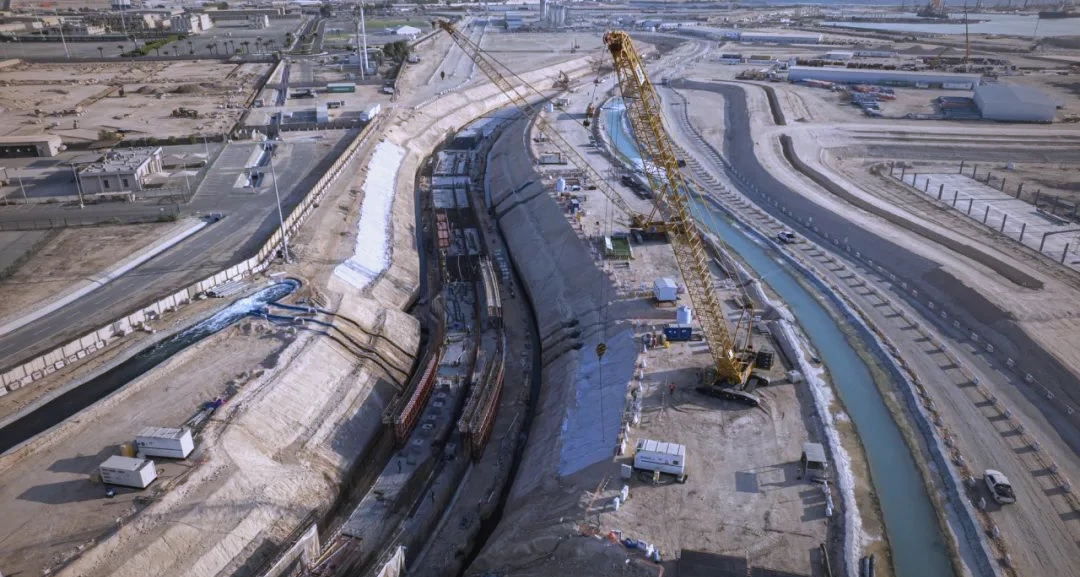
01 Diriyah
- Planned:A $62.2 billion cultural heritage city, featuring 40+ luxury hotels and a 50,000 m² underground museum.
- 2026 Reality:Already operational with ongoing investment; multiple high‑end hotels have recently signed agreements.
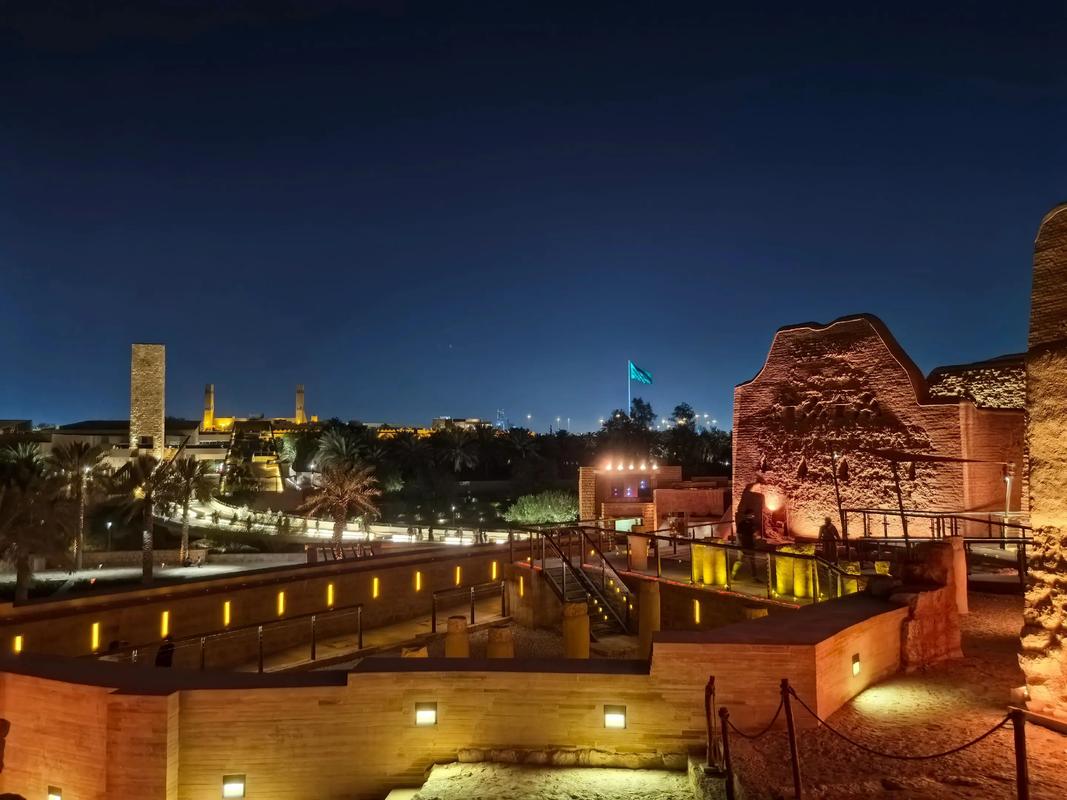
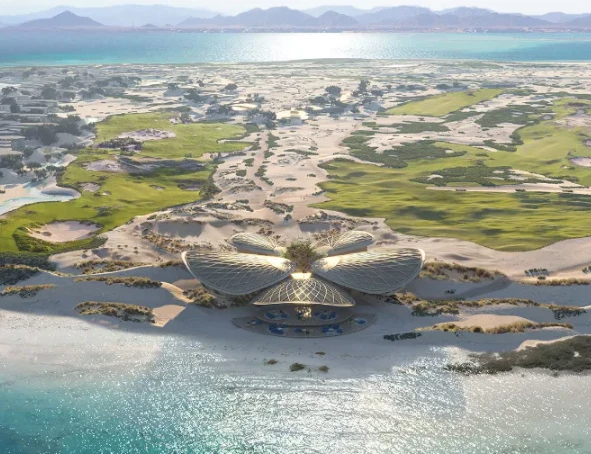
02 Red Sea Tourism Destination
- Planned:A luxury tourism destination with hotel clusters and eco‑protection facilities.
- 2026 Reality:Annual construction investment exceeds $8 billion, with projects accelerating.
Saudi sovereign development strategy is undergoing a systematic transformation—from "chasing blockbuster projects" to "strengthening the fundamentals," from single iconic mega‑landmarks to a diversified, pragmatic, phased construction approach. In other words, construction has not stopped; rather, the focus has strategically shifted.
Trillions in Infrastructure Remain—Opportunities are Diversified and Sustained
In 2026, the scale of the Saudi contracting market has reached $2.1 trillion**, with new project investments of **$149.5 billion—of which 42% are directly linked to "Vision 2030" strategic objectives (e.g., NEOM, ESKAN housing), and 38% support international event infrastructure (2034 World Cup, 2030 Expo, etc.).
Four structural, rigid demand drivers collectively fuel sustained Chinese building materials exports:
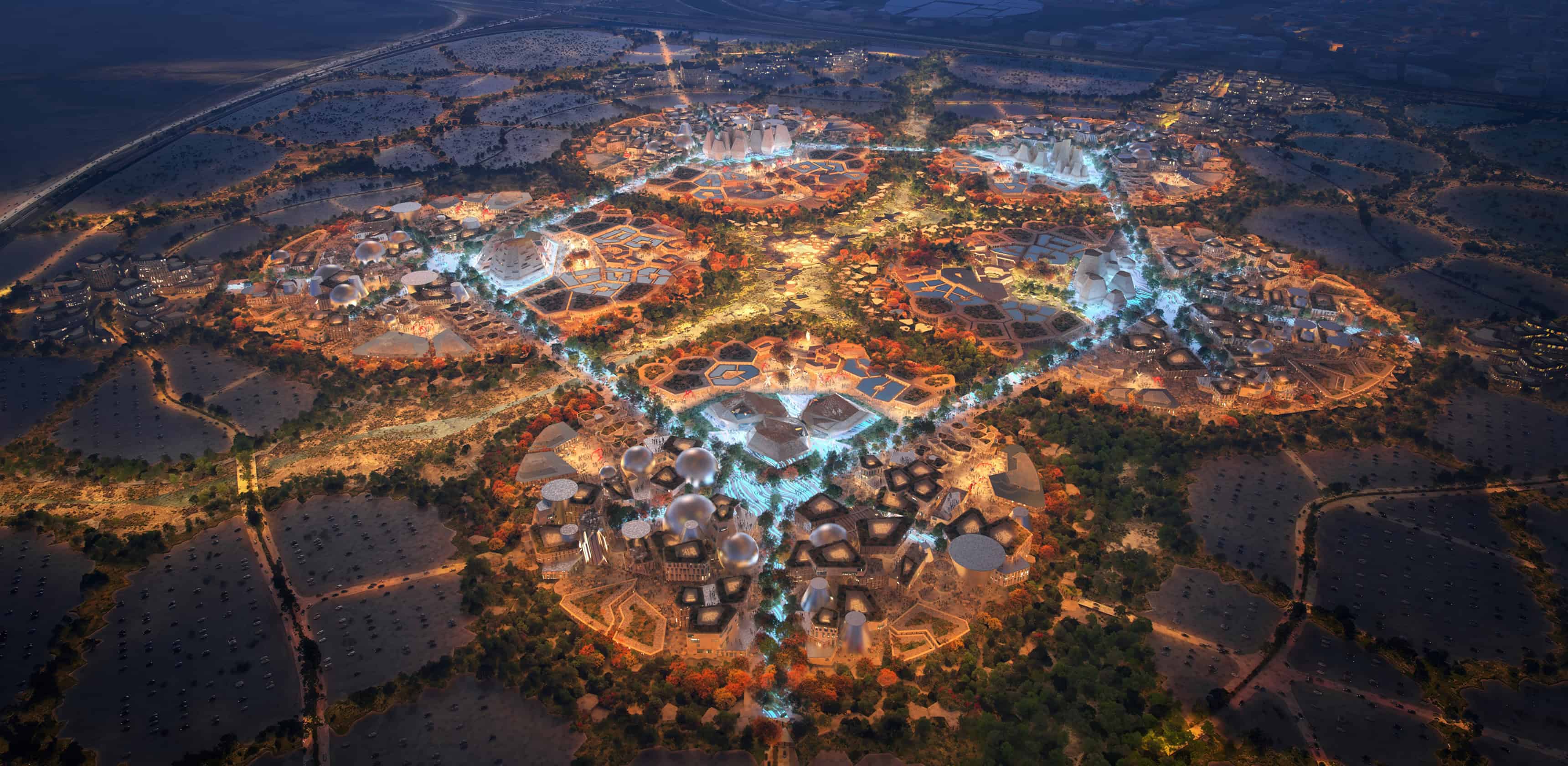
First, Expo 2030
Total investment exceeds $50 billion, covering over 600 hectares. Once completed, the site is expected to attract 40 million visitors. This massive event demands substantial building materials for the renovation and new construction of hotels, pavilions, exhibition halls, and other structures.
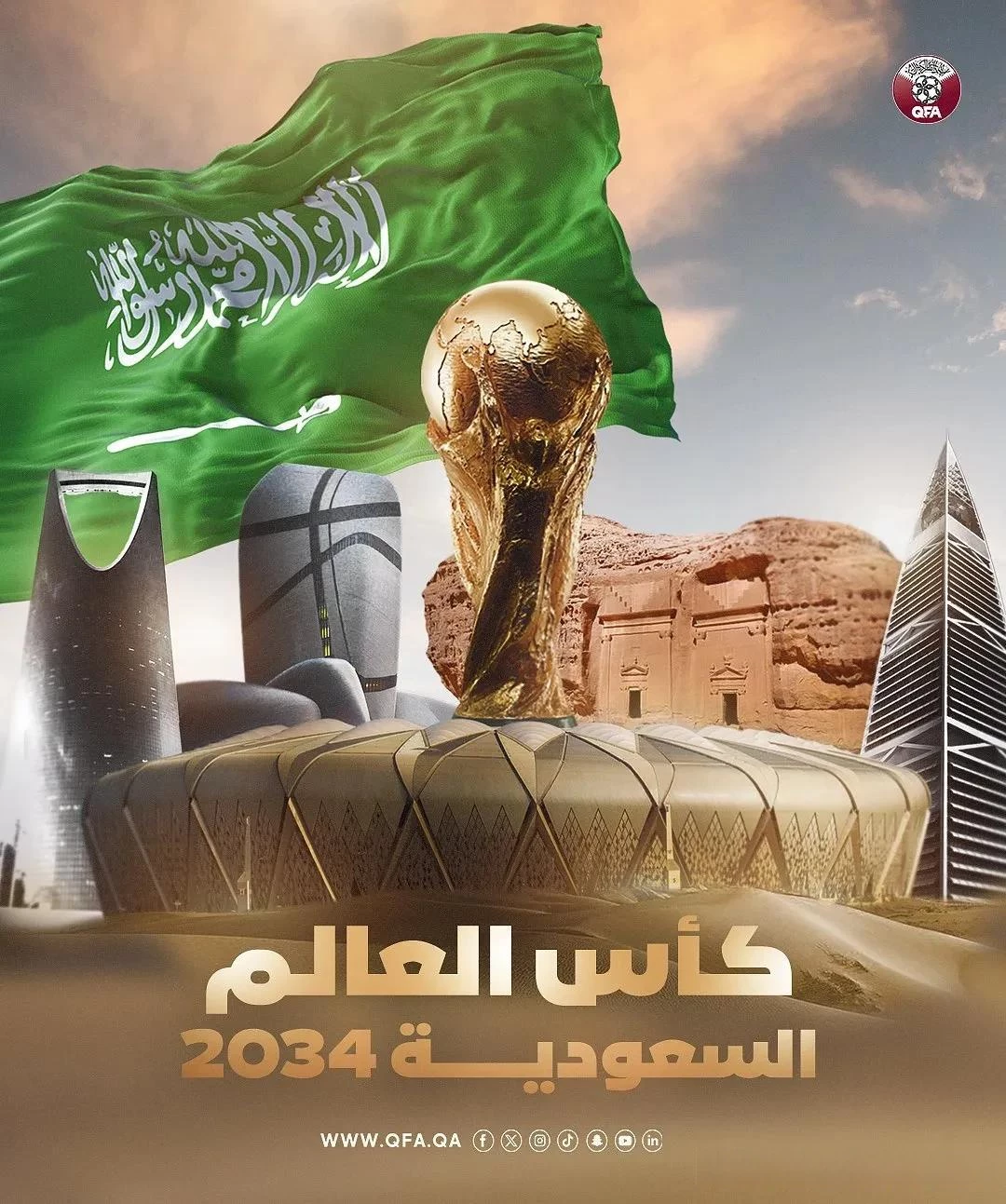
Second, the 2034 World Cup
Transport hub upgrades in host cities such as Riyadh and Jeddah alone exceed $30 billion, covering metro extensions, road widening, and more. Large stadium projects require everything from structural materials to interior finishes; specialised products—pitch turf, lighting, HVAC systems—also drive import demand for sports facility materials.
Third, the Full Resumption of Jeddah Tower
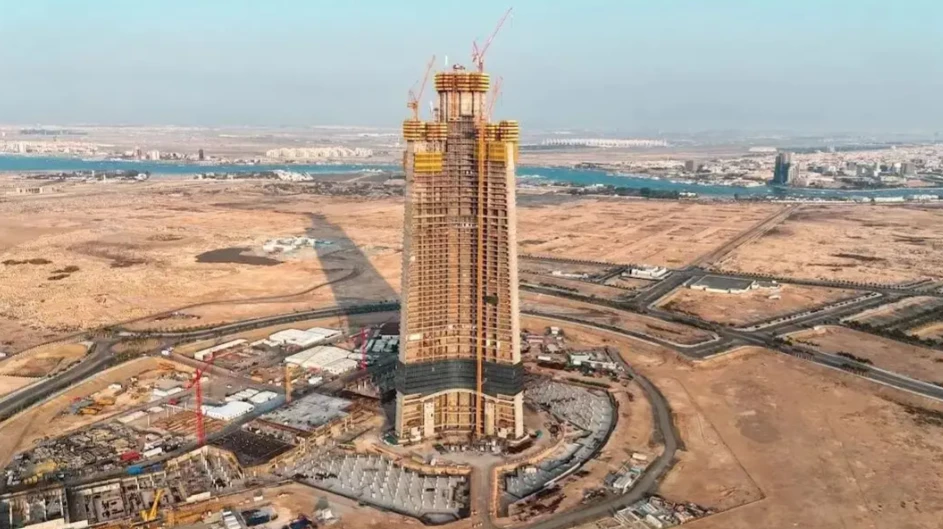
This world's tallest building (designed to exceed 1,000 metres), which had been stalled for years, is now in full‑speed construction. As of March 2026, the tower has reached the 91st floor, surpassing 370 metres in height. Curtain wall installation and MEP works are in full swing, with over 5,200 on‑site workers progressing at a rate of one floor every five days on average. Steel structures, curtain walls, elevators, fireproof materials, smart control systems—all require a wide range of suppliers.
Fourth, Accelerated Urban Infrastructure in Riyadh
King Abdullah Gardens have completed all main structural works, covering 2 million square metres. The Abu Bakr Al‑Siddiq Tunnel, running through Salman King Park, is 2,430 metres long and is now in its final testing phase. Riyadh's urban renewal and municipal development exemplify Saudi Arabia's "shift from flashy to solid"—water, power, roads, landscaping, and public facilities require long‑term, stable material supply, not just one‑off project‑driven demand.
In 2025, the Saudi building materials market was valued at $88.5 billion**, with import dependency at approximately **70%**. The construction market is projected to reach **$112.35 billion in 2026 and exceed $148.7 billion by 2031, with a CAGR of roughly 5.77%. In the first three quarters of 2026, steel imports grew by 24.5% year‑on‑year, cement exports are expected to surge 325%, and high‑value‑added categories such as smart locks and energy‑efficient glass have seen growth rates exceeding 50%. The overall market is not shrinking—it is expanding in the right direction.
"Saudi‑China Housing Cooperation" to Drive Surge in Building Materials Exports
01 A Wider Door Than You Might Imagine
However, expanding opportunities do not mean everyone automatically gets a ticket. In recent years, quite a few building materials companies have stumbled in the Middle East—some due to insufficient understanding of the SABER mandatory certification system, leading to goods being held at customs; others because they chased large orders without adequate on‑the‑ground resources; or because they lacked local distribution teams for long‑term cultivation. The entry barrier to the Saudi market is the combination of certification, local presence investment, and product adaptability—all three are indispensable.
Yet, precisely because of these challenges, 2026 marks an unprecedentedly dense period for Saudi‑China cooperation.
From June 13 to 16, 2026, Saudi Minister of Municipal and Rural Affairs and Housing, Majed Al Hogail, led a delegation to China and launched the first "Saudi‑China Contractor Forum" in Shenzhen. During the forum, six memoranda of understanding were signed, covering investment cooperation, construction technology, knowledge exchange, public‑private partnerships, sustainable construction, and supply chains. Saudi Arabia plans to cooperate with Chinese partners to build over 100,000 housing units by 2030.
This means that over the next four years, Chinese building materials companies will have a materials demand channel backed by intergovernmental agreements. This is not just about brand‑building opportunities from "landmark projects" like hotels and museums—large‑scale residential construction is the true "deep ocean" for Chinese materials exports.
02 The Evolution Path of Chinese Building Materials Manufacturers in the Middle East
If market opportunity is the "external factor," the deeper question is: Are Chinese building materials companies ready for a comprehensive upgrade in technology, quality, and aesthetics?
In fact, local companies are already responding with action—moving from simple exports to deep localisation.
This year, several Guangdong‑based building materials companies have reached strategic cooperation with Saudi counterparts. The Guangdong Financial City Chamber of Commerce organised companies such as Eagle Ceramics and Jinyi Ceramics Group to sign strategic cooperation agreements with Saudi Mubadala Investment Company. Jinyi Ceramics Group, known for its high‑end "textured ceramic tiles," has proprietary products that perfectly meet the Middle East's rigid demand for premium building materials.
Earlier, the Guangdong Panyu International Chamber of Commerce organised building materials companies to participate in the Jeddah Build Expo, where the Economic and Commercial Counsellor of the Chinese Consulate General in Jeddah, Mr. Lu Ye, personally visited their booths. One of the companies successfully established a local agent.
On the more technologically advanced front, Sinoma International recently signed an EPC contract worth $298 million for a cement production line, demonstrating Chinese companies' comprehensive advantages in technology and engineering services. PowerChina, CHEC, and other central SOEs are deeply involved in Saudi railway and port projects. Additionally, a Chinese company has applied new materials combining bamboo and ceramic granules in the Red Sea resort area, achieving 63% lower lifecycle carbon emissions while maintaining wind resistance and heat tolerance—moving from simply "selling tiles" to participating in overseas engineering design and material technology export. Chinese building materials companies are undergoing a full‑scale upgrade.
For manufacturers across the building materials supply chain, this means we are fully capable—with reliable quality, precise cost control, and increasingly mature local services—to secure sustained orders in a high‑import‑demand, high‑volume market like Saudi Arabia.
A Direct Link Between Chinese Factories and Saudi Projects
Talk of opportunities without offering a path forward is meaningless. The real entry pass to the Saudi market is direct access to project decision‑makers.
The Saudi Jeddah International Building & Decoration Exhibition also forms a key window for Chinese building materials companies to comprehensively access the Saudi market. But September is unique—it sits at the convergence of three critical timelines: the peak of façade procurement, the hotel FF&E purchasing window, and the Expo 2030 construction sprint phase. Unlike purely conceptual venues that require long waits, this exhibition targets projects that are already under construction, already procuring, and already paying. In September, Jeddah is the shortest distance connecting Chinese factories with Saudi mega‑projects.
The trillion‑dollar "Vision 2030" market remains intact. NEOM's phased adjustments and the "shift from flashy to solid" paradigm are not a crisis for Chinese building materials companies—rather, they signal a more friendly, pragmatic, and stable long‑term benefit. Saudi Arabia plans to deliver over 1 million housing units and more than 362,000 hotel rooms by the end of 2030. This is not hype—it is real, long‑cycle, end‑user demand that requires enormous material supply.
The market is always open to prepared enterprises. The real question is no longer "Is there still an opportunity in Saudi Arabia?"—opportunity has always been there. The question is: How quickly and in what way will your company secure its entry ticket to the Saudi market?
September 15–17, Jeddah — Saudi Jeddah International Building & Decoration Exhibition.
We have laid out the latest launching pad for Chinese building materials companies to access the $2.1 trillion super‑market. Where the opportunity is, that is where we will be—waiting for you.
