
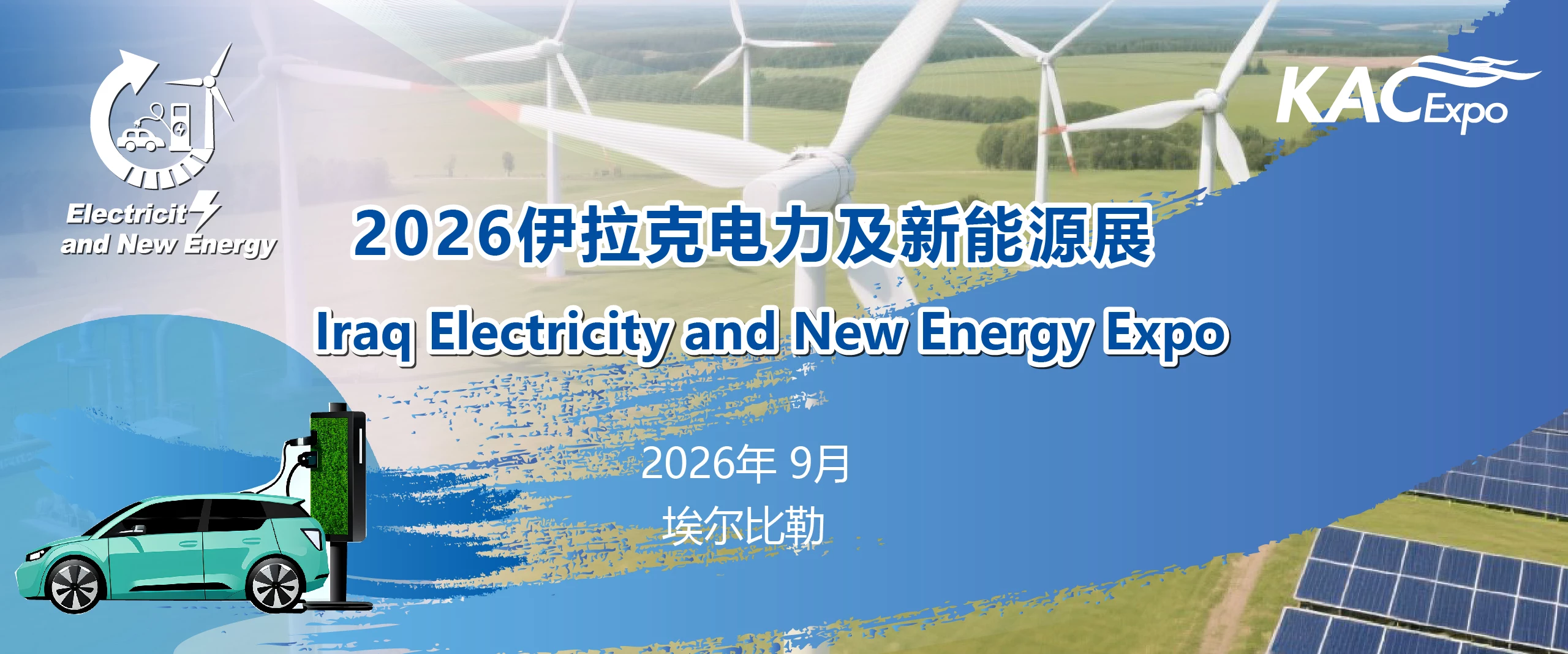
The 6th Iraq Electricity and New Energy Expo
Exhibition time: September 2026 (tentative)
Exhibition location: Erbil International Expo Center, Iraq
Host: KAC International Exhibition Group
Scope of exhibits:
1. Solar energy utilization: solar thermal, solar panel components, solar water heaters, solar stoves, solar heating, solar air conditioning, solar power generation systems, solar batteries, solar lighting fixtures, solar panels, photovoltaic modules;
2. Photovoltaic products: photovoltaic lighting systems and products, components and related production equipment, measurement and control systems, solar energy system control software, photovoltaic power generation systems;
3. Green and clean energy: wind turbines, wind power supporting products, biomass fuel, tidal energy and other ocean energy systems, geothermal energy, nuclear energy, etc;
4. Environmental protection: waste utilization, fuel electromagnetic, coal processing, air energy, environmental protection and energy conservation, pollution control and recycling, source policies, energy investment, etc;
5. Water treatment energy technology: water treatment technology and equipment, water supply and drainage systems, various valves, pumps, pipes, etc;
6. Green City: Green Buildings, Green Energy Transformation, Sustainable Development, Green Products, Practices and Technologies, Low Energy Buildings, Clean Transportation, etc
Project Introduction:
The Iraq Electricity and New Energy Exhibition is mainly aimed at relevant enterprises specializing in the field of electricity and energy, and has played a significant role in promoting the development of electricity and new energy throughout Iraq in the past few years. This also reflects the great attractiveness of Iraq's energy and electricity investment prospects.
The 5th exhibition in 2024 attracted nearly 180 exhibitors from the Middle East, Europe, South Asia and other regions, with an exhibition area of 17000 square meters and over 9000 on-site visitors, mainly local energy industry representatives and buyers and technical experts from neighboring countries.
During the exhibition, multiple technology promotion sessions and policy interpretation meetings related to energy infrastructure reconstruction were held, covering topics such as photovoltaic energy storage, upgrading of transmission and distribution networks, construction of independent power stations, clean energy access, and talent cultivation in the power industry, which received positive responses from participating institutions.
Introduction to Iraq:
The Republic of Iraq is located in southwestern Asia, northeast of the Arabian Peninsula, with a land area of 438317 square kilometers and a population of 40.22 million. In 2023, Iraq's gross domestic product reached 255 billion US dollars, a year-on-year increase of 2.3%.
After the Iraq War, Iraq pursued a proactive and pragmatic foreign policy, emphasizing the development of relations with major powers; Seeking cooperation with neighboring countries to create a favorable external environment for domestic stability; Strive to seek assistance from the international community for the post-war reconstruction of Iraq. At the beginning of the 21st century, Iraq had restored or established diplomatic relations with nearly 80 countries and resumed activities within regional and international organizations such as the Arab League, United Nations agencies, and the International Monetary Fund.
Iraq has the fifth largest proven oil reserves in the world. Oil exports are the absolute pillar of a country's fiscal revenue. In addition to abundant oil and gas resources, it also has fertile farmland, water resources, and a young population structure. After decades of war and international sanctions, infrastructure has suffered severe damage. The current core task is to rebuild and promote economic diversification on a large scale, reducing dependence on oil.
Market opportunities:
According to publicly available data from the International Energy Agency (IEA) and the World Bank:
The total installed capacity of electricity in Iraq is approximately 23GW, but due to aging transmission networks, unstable fuel supply, and equipment damage, the actual effective power supply capacity is far below the design load.
About 40% of the country's electricity comes from natural gas power generation, followed by oil and hydropower. The proportion of renewable energy is currently less than 2%, and there is huge room for improvement.
By 2030, Iraq plans to add about 10GW of solar installed capacity, and promote cross-border power grid cooperation with neighboring countries (such as Iran, Türkiye, Saudi Arabia).
The electricity shortage in Iraq in 2024 is about 10GW, especially during the peak summer period, which is a key factor restricting people's livelihoods and industrial development.
The government has launched multiple power grid upgrades and smart metering projects, which are expected to gradually improve infrastructure conditions over the next five years.
Diplomatic relations between the two countries:
Since China and Iraq signed the "the Belt and Road" cooperation document in 2015, bilateral cooperation in various fields has yielded fruitful results. China actively participates in the reconstruction of energy, infrastructure and other fields in Iraq, providing assistance to the best of its ability for Iraq's economic and social development. China is Iraq's largest trading partner, and Iraq is China's third largest trading partner among Arab countries. In 2023, the bilateral trade volume between China and Iran will be 49.74 billion US dollars. As a country along the the Belt and Road, Iraq will welcome more Chinese enterprises in the future.
Saudi Beauty and Fashion Expo
Exhibition time: September 2026 (tentative)
Venue: Jeddah International Exhibition Center, Saudi Arabia
Host: KAC International Exhibition Group
Scope of exhibits:
1. Cosmetics: cosmetics, skin care products, perfume, hair care products, sunscreen products
2. Beauty equipment: sanatorium salon equipment, hair salon accessories, beauty salon equipment and devices, beauty therapy equipment, skin care equipment, water therapy equipment, hair transplant equipment, gym equipment, fitness equipment, ultrasonic massagers
3. Beauty products: body care products, nail care and facial contouring products, hairdressing tools, oral care products, wigs, hair accessories and other related products
4. Beauty materials: beauty product packaging, raw materials, gifts, candles, beauty services, magazines
Project Introduction:
The Saudi Beauty & Fashion Exhibition is held annually at the Jeddah International Exhibition Center in Saudi Arabia, covering an exhibition area of over 20,000 square meters. It has been successfully held for eight sessions to date. Last year's exhibition attracted 340 exhibitors from 19 countries around the world, with professional visitor numbers reaching 24,300, collectively witnessing this grand event in the beauty and hair industry.
During the exhibition, numerous international buyers engaged in face-to-face negotiations with exhibitors, successfully signing a large number of cooperation intentions. As one of the largest economies in the Middle East, Saudi Arabia's massive market demand and strong purchasing power provide exhibitors with an excellent opportunity to explore the Middle East market. Many exhibitors expressed that through this exhibition, they not only met new partners but also gained a deeper understanding of the Saudi market and the broader Middle East market.
Introduction to Saudi Arabia:
Saudi Arabia is located in the southwestern part of the Arabian Peninsula in Asia, occupying 70% of the entire Arabian Peninsula. It is bordered by the Persian Gulf to the east and the Red Sea to the west, sharing borders with Jordan, Iraq, Kuwait, the United Arab Emirates, Oman, Yemen, and Egypt. In 2025, Saudi Arabia's GDP reached 1.27 trillion US dollars, with a per capita GDP of 35,231 US dollars and a GDP growth rate of 4.0%. The Saudi currency is the Saudi Riyal, which maintains a fixed exchange rate of 1:3.75 against the US dollar, offering significant trade advantages. Saudi Arabia's total population is approximately 34.56 million, featuring a young demographic structure with a median age of 29.6 years, demonstrating strong consumer desire and purchasing power. The consumption spectrum is broad, encompassing wealthy nobility, affluent middle-class citizens, ordinary people, and foreign laborers accounting for nearly 45% of the total population, forming high, middle, and low consumer groups.
The Saudi economy is primarily an energy economy based on resource extraction, with its oil reserves and production ranking among the world's highest. Oil serves as the main pillar of Saudi Arabia's economy. Its manufacturing sector is relatively underdeveloped, and apart from oil and its byproducts, a large quantity of materials rely on imports. China is Saudi Arabia's largest trading partner, largest export destination, and largest source of imports. In 2025, China accounted for approximately 25%-28% of Saudi Arabia's import share, demonstrating the strong economic complementarity between the two countries.
Market opportunities:
Saudi Beauty Market Overview
According to reports from Mordor Intelligence, the Saudi beauty and personal care market is estimated to reach 7.56 billion US dollars in 2025, projected to grow to 8.03 billion US dollars in 2026, and expected to surpass 10.84 billion US dollars by 2031 (with a compound annual growth rate of 6.17% from 2026 to 2031). The overall Middle East beauty market (including Saudi Arabia) continues to expand, with Saudi Arabia holding a dominant share among Gulf Cooperation Council (GCC) countries. According to a report released by luxury retailer Chalhoub Group, Saudis are the highest consumers of beauty products in the Middle East, with most beauty categories primarily driven by female shoppers.
Market research data indicates that Saudi women's expenditure on cosmetics is significantly higher than the global average. The Chalhoub Group report points out a shift in beauty concepts within the GCC market, moving from embracing European ideals to desiring more Arab and Middle Eastern characteristics. Consumers seek to make their appearance more "authentic" by expressing their unique beauty and features, wanting to showcase their distinct beauty and characteristics. Consequently, they prefer mild beauty adjustments and focus more on "inner beauty," including health, happiness, and self-esteem, which all influence appearance.
As Saudi women further integrate into society (with the female labor force participation rate rising from 17.4% in 2017 to 36% in early 2023, exceeding the established target of 30%), demand for halal beauty products in Saudi Arabia is also growing. The Saudi Food and Drug Authority (SFDA) and GCC standardization organization GSO 1943:2024 standards have established strict compliance frameworks. Halal certification covers ingredient sourcing, manufacturing processes, and packaging materials, creating entry barriers for international brands unfamiliar with Islamic regulations. The preference for natural and plant-based ingredients aligns with halal requirements, creating development space for clean beauty products.
Diplomatic relations between the two countries:
In recent years, the development of China Saudi Arabia relations has shown three hotspots: high-level exchanges, economic and trade cooperation, and cultural exchanges. With the steady progress of the "the Belt and Road" initiative, Saudi Arabia actively responds to China's call. China and Saudi Arabia are each other's strategic partners at the national level, and their diplomatic relations are stable. In March 2023, with the assistance of China, Saudi Arabia and Iran reached an agreement to restore diplomatic relations. On March 29 of the same year, the Saudi Arabian Cabinet approved the decision to join the Shanghai Cooperation Organization. In November 2023, the People's Bank of China and the Central Bank of Saudi Arabia signed a bilateral currency swap agreement, indicating that China Saudi trade has entered a new stage and is another milestone in China Saudi trade. Under the guidance of national strategy, China and Saudi Arabia have engaged in comprehensive cooperation in military, economic, cultural, scientific, and sociological fields, reflecting the close and stable strategic partnership between the two countries and laying a solid foundation for future cooperation.
In October 2024, the Saudi government announced the construction of a four square kilometer Saudi Central Special Economic Zone within King Salman International Airport. The economic zone will be jointly constructed by King Salman International Airport and international investment institution Yida Capital, with a focus on developing manufacturing, logistics, and trade industries to promote economic and trade cooperation between China and Saudi Arabia. The economic zone is expected to start construction in 2025. In 2025, China Saudi Arabia relations will celebrate the 35th anniversary of the establishment of diplomatic relations. In December, Wang Yi, member of the Political Bureau of the Communist Party of China Central Committee and Minister of Foreign Affairs, visited Saudi Arabia and signed the "Agreement between the People's Republic of China and the Kingdom of Saudi Arabia on Mutual Exemption of Visa for Personnel Holding Diplomatic, Official and Special Passports". The trade cooperation between the two countries continues to deepen, and the bilateral trade volume has exceeded 89.5 billion US dollars from January to October 2025, with China firmly ranking as Saudi Arabia's largest trading partner. In May of the same year, more than 70 agricultural cooperation agreements were signed between Chinese and Saudi Arabian enterprises and institutions, with a total amount exceeding 4 billion US dollars, covering areas such as green technology application, intelligent equipment output, biological breeding research and development, and cross-border supply chain.
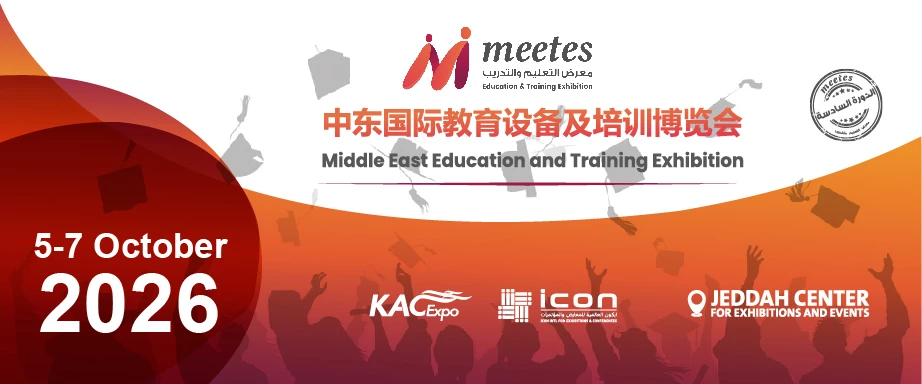
The 8th Middle East Education And Training Exhibition
Exhibition time: October 5-7, 2026
Venue: Jeddah International Exhibition Center, Saudi Arabia
Host: KAC International Exhibition Group/Jeddah Chamber of Commerce & Industry /Ministry of Education, Kingdom of Saudi Arabia
Scope of exhibits:
1. Education Service Exhibition Area: Various colleges, universities, education and training institutions and their overseas study service providers, art suppliers, online learning service providers, rehabilitation and education centers for special needs groups, transportation services, health and medical services, printing and packaging services, catering services, cleaning and maintenance services, etc;
2. Exhibition Area for General Education Facilities and Equipment: Classroom and Auditorium Furniture, Laboratory Equipment, Special Needs and Learning Disabilities Education Equipment, Public Library Equipment, Indoor Game Facilities, Outdoor Facilities, Water Purification Equipment, Smart Laundry Equipment, Kitchen Equipment, Safety Protection and Firefighting Equipment, Safety Prevention and Intelligent Monitoring Equipment, Video Surveillance Equipment, One Card, Electronic Attendance, Entrance and Exit Facial Recognition Equipment, etc;
3. Stationery and consumables exhibition area: office equipment, office supplies and consumables, teaching tools, paper and paper products, teaching aids, sports equipment, myopia prevention and control, school uniforms, stationery backpacks, holiday decorations, gifts and prizes, etc;
4. Technology Equipment and Technology Exhibition Area: Electronic Education Equipment, AR/VR and Peripheral Products, Virtual Reality Software, Mobile Intelligent Terminals, Interactive Entertainment Products, Projection Systems and Equipment, 3D Shooting and Scanning, 3D Printing and Modeling, Intelligent Robots;
5. Exhibition area for puzzle games and entertainment peripherals: board game cards, puzzle chess, assembled models, programming robots, gaming esports, trendy blind boxes, anime figurines, artistic creation and its peripheral products;
6. School Infrastructure and Interior Decoration Exhibition Area: Floor tiles and carpets, artificial turf, fresh air system, air conditioning fans, smart lighting, integrated decoration, building panels, paint wallpaper, etc.
Project Introduction and Advantages:
The Middle East International Education Equipment and Training Expo has been successfully held for 7 sessions and has a high level of popularity. By participating in exhibitions, the exposure of enterprises has been enhanced, brand communication has been promoted, and regional influence has been improved. It is an excellent starting point for enterprises to enter the Middle East education industry, promote educational technology and service projects, achieve marketing goals, and expand customer base. This exhibition provides a platform for various universities, colleges, and educational institutions to showcase their educational programs and professional services, making it easy for students and parents to understand the registration process, admission requirements, other services, and other detailed information. It has become an ideal platform for students and parents to directly interact with educational institutions. Exhibitors can establish connections and collaborate with governments and local private educational institutions in various Middle Eastern countries through exhibitions. During the exhibition, the organizers cordially invite experts and researchers in the field of education from various countries to hold multiple thematic seminars, focusing on the issues that students and parents are most concerned about, such as compensation for educational negligence, educational service processes, treatment of high and low performing students, equal rights for male and female students, special education, and gifted student groups. The hosting of the Middle East International Education Equipment and Training Expo not only promotes trade in education and related products between China and Saudi Arabia, but also lays a solid foundation for deep cooperation between the two countries in the fields of humanities and commerce.
The previous Middle East International Education Equipment and Training Expo attracted 22582 professional visitors to visit and negotiate. The on-site transaction amount reached 61.27 million US dollars, and the intended transaction amount was as high as 267 million US dollars. The participating companies expressed high satisfaction with the exhibition results, and some companies even directly booked exhibition quotas for the next exhibition on the spot. Against the backdrop of the Saudi government's strong willingness to invest in the education sector and a significant increase in budget. Chinese companies have enhanced their competitiveness in this field through this exhibition, achieving a mutually beneficial cooperation prospect for both parties.
Introduction to Saudi Arabia:
Saudi Arabia is located on the Arabian Peninsula in southwestern Asia, covering 70% of the entire Arabian Peninsula. It borders the Persian Gulf to the east and the Red Sea to the west, and shares borders with countries such as Jordan, Iraq, Kuwait, the United Arab Emirates, Oman, Yemen, and Egypt.
In 2025, the GDP will reach 1.27 trillion US dollars, with a per capita GDP of 35231 US dollars. The Saudi Arabian currency is the Saudi riyal, with a fixed exchange rate of 1: 3.75 to the US dollar, giving it a significant trade advantage.
Saudi Arabia ranks 41st in the world in terms of population, with a total population of over 37 million by the end of 2024. 80% of the population is under the age of 40, and 70% is under the age of 30. Saudi Arabia has a strong desire and purchasing power, ranking 11th in the global retail trade index, and its consumption accounts for 70% of the total consumption in the Middle East region. There is a wide range of consumer groups, including wealthy aristocrats and the middle class, as well as ordinary people and two-thirds of the total population of migrant workers, forming three consumer groups: high, medium, and low.
The Saudi economy is an energy economy mainly based on resource extraction, with oil reserves and production ranking first in the world. Oil is the main pillar of the Saudi economy. Its manufacturing industry is very weak, except for oil and related products,
95% of the goods rely on imports, which is a complementary economy to China's strong manufacturing industry. China is Saudi Arabia's largest trading partner, largest exporter, and largest source of imports.
Market opportunities:
Saudi Arabia's 2030 Vision Reform Plan
In recent years, with the third generation leader of Saudi Arabia, Salman bin Salman, taking office, Saudi Arabia has begun to make bold reforms in order to build a new sustainable economy that can break away from oil dependence. We aim to build Saudi Arabia into the heart of the Arab and Muslim world, a world economic powerhouse for global investment, and a global hub connecting Asia, Europe, and Africa in future development, and have announced the "2030 Vision Plan". This vision plan encompasses goals in multiple fields, including infrastructure, energy, economy, education, society, and culture. Saudi Arabia is changing the global business landscape and attracting global traffic through massive investments.
Jeddah, as the second largest city in Saudi Arabia and a port city along the Red Sea coast, is the residence of the government's Ministry of Foreign Affairs and embassies of various countries. It has the largest port in Saudi Arabia and is an extremely important financial center in Saudi Arabia. Meanwhile, Jeddah is only 70 kilometers away from the holy city of Mecca, a global tourist destination for 1.8 billion Muslims, making it the most important tourist city in Saudi Arabia. As the economic and trade center of Saudi Arabia, with the advancement of Saudi reform and opening up, Jeddah's trade prospects will surpass Dubai and become the largest trading market in the Middle East. Compared to the Dubai market, which has a small market size and mainly focuses on low-priced transshipment, the local terminal market in Saudi Arabia has a great advantage in terms of large volume and high prices, providing significant profit guarantees for China's foreign trade enterprises.
Diplomatic relations between the two countries:
In recent years, the development of China Saudi Arabia relations has shown three hotspots: high-level exchanges, economic and trade cooperation, and cultural exchanges. With the steady progress of the the Belt and Road Initiative, Saudi Arabia actively responds to China's call. China and Saudi Arabia are each other's strategic partners at the national level, and their diplomatic relations are stable.
In March 2023, with the assistance of China, Saudi Arabia and Iran reached an agreement to restore diplomatic relations. On March 29 of the same year, the Saudi Arabian Cabinet approved the decision to join the Shanghai Cooperation Organization. In November 2023, the People's Bank of China and the Central Bank of Saudi Arabia signed a bilateral local currency swap agreement, which indicates that China Saudi Arabia trade has entered a new stage and is another milestone of China Saudi Arabia trade. Under the guidance of national strategy, China and Saudi Arabia have engaged in comprehensive cooperation in military, economic, cultural, scientific, and sociological fields, reflecting the close and stable strategic partnership between the two countries and laying a solid foundation for future cooperation. I believe that with the joint efforts of both sides, China Saudi Arabia cooperation will usher in more and deeper development.
In October 2024, the Saudi government announced the construction of a four square kilometer Saudi China Special Economic Zone within King Salman International Airport. The economic zone will be jointly constructed by King Salman International Airport and international investment institution Yida Capital, with a focus on developing manufacturing, logistics, and trade industries to promote economic and trade cooperation between Saudi Arabia and China.
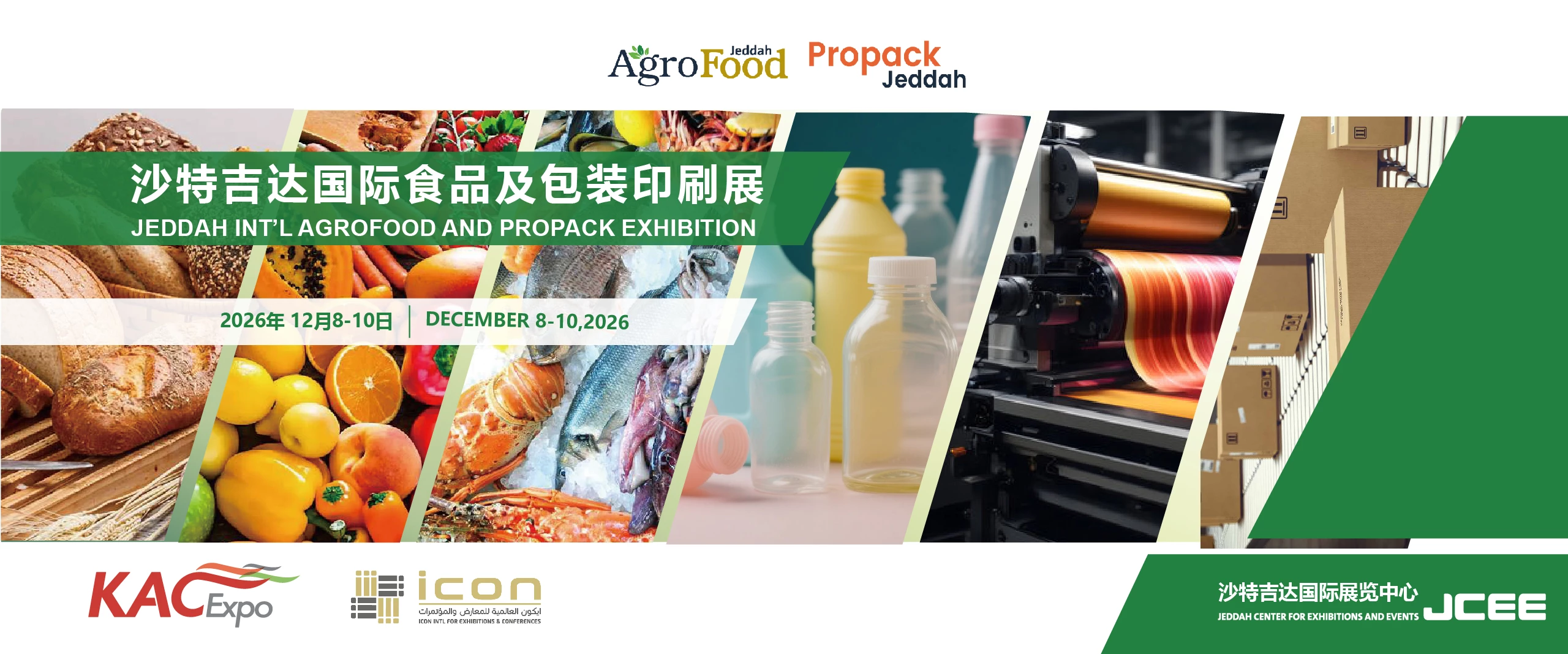
The 30th Jeddah Int’l Agro-food and Print Packing Exhibition
Exhibition time: December 8-10, 2026
Venue: Jeddah International Exhibition Center, Saudi Arabia
Host: Ministry of Environment, Water and Agriculture, Kingdom of Saudi Arabia/KAC International Exhibition Group/Jeddah Chamber of Commerce & Industry
Scope of exhibits:
1. Food additives, seasonings, canned food, food processing technology, non-alcoholic beverages, marine food, baked goods, sugary and candy processing technology, frozen food, refrigerated food, dairy products, coffee and tea, meat products, poultry food, halal food, health food, specialty and fine food, fast food and snacks, convenience food, etc;
2. Public catering products, kitchen equipment, refrigeration facilities, hotel equipment, hotel supplied products and services, catering services and products, tableware and accessories, hotel furniture, store decorations, store display stands, etc;
3. Food processing machinery and accessories, food packaging machinery, food packaging, decoders and measuring equipment, etc;
4. Food packaging machinery and accessories, vacuum packaging machines, box pasting machines, bag making machines, filling, filling, sealing, sealing, cutting machines, testing instruments, meat processing technology, packaging materials, plastic machines, preservation and anti-corrosion agents, quality inspection equipment, weighing equipment, smoking&coating equipment, pattern, text, barcode printing equipment, packaging machines, sterilization and disinfection equipment, etc;
5. Agricultural and related machinery, equipment, technology, etc;
6. FFS packaging machine, filling and bottling machine, coding and labeling, labeling machine, conveyor belt, secondary packaging machine, line end packaging machine, logistics and materials, packaging raw materials, flexible packaging processing machine, paper processing machine, box pasting machine, hard box manufacturing machine, corrugated box manufacturing machine, etc.
Project Introduction:
This exhibition has been successfully held for 29 sessions in Saudi Arabia, providing an excellent platform for food foreign trade enterprises as well as advanced technology and equipment manufacturers. The exhibition attracted 486 enterprises from 16 countries and regions worldwide to participate, covering an exhibition area of 20,000 square meters. Exhibitors came from China, Bangladesh, Oman, Qatar, Uzbekistan, the Netherlands, Tunisia, Indonesia, Japan, Iraq, Kuwait, Thailand, Jordan, Egypt, Sudan, and the host country Saudi Arabia, jointly building a diverse, open, and active global industry exchange and trade platform. The Chinese delegation performed particularly prominently, with 83 enterprises showcasing their products across the entire industry chain including food ingredients, food processing, intelligent packaging, and high-end printing equipment. They became a highly anticipated focal point at the exhibition, vividly demonstrating the strength and growth potential of "Intelligent Manufacturing in China" taking root in the Saudi market.
Introduction to Saudi Arabia:
Saudi Arabia is located in the southwestern part of the Arabian Peninsula in Asia, occupying 70% of the entire Arabian Peninsula. It is bordered by the Persian Gulf to the east and the Red Sea to the west, sharing borders with Jordan, Iraq, Kuwait, the United Arab Emirates, Oman, Yemen, and Egypt. In 2025, Saudi Arabia's GDP reached 1.27 trillion US dollars, with a per capita GDP of 35,231 US dollars and a real GDP growth rate of 4.5%. The Saudi currency is the Saudi Riyal, which maintains a fixed exchange rate of 1:3.75 against the US dollar, offering significant trade advantages. Saudi Arabia's total population is approximately 34.56 million, and as of July 2025, foreign residents accounted for 44.4% of the total population. The demographic structure is young, with the population aged 15-64 comprising 74.7% and those under 14 accounting for 22.5%, demonstrating strong consumer desire and purchasing power. The consumption spectrum is broad, encompassing wealthy nobility, affluent middle-class citizens, ordinary people, and foreign laborers accounting for nearly 45% of the total population, forming high, middle, and low consumer groups.
The Saudi economy is primarily an energy economy based on resource extraction, with its oil reserves and production ranking among the world's highest. Oil serves as the main pillar of Saudi Arabia's economy, with crude oil and natural gas activities accounting for 17.1% of GDP. Its manufacturing sector is relatively underdeveloped, and apart from oil and its byproducts, a large quantity of materials rely on imports. China is Saudi Arabia's largest trading partner, largest export destination, and largest source of imports. From January to September 2025, China accounted for 25%-28% of Saudi Arabia's import share, demonstrating the strong economic complementarity between the two countries.
Market opportunities:
Saudi Vision 2030 Reform Plan
In recent years, with the rise of Saudi Arabia's third-generation leader, Mohammed bin Salman, the Kingdom has embarked on ambitious reforms aimed at creating a sustainable new economy that can move beyond oil dependence. Saudi Arabia aspires to become the heart of the Arab and Islamic world, a global investment powerhouse, and a global hub connecting Asia, Europe, and Africa in future development, announcing the "Vision 2030" plan. This visionary plan encompasses goals across multiple sectors, including infrastructure, energy, economy, society, and culture. Through massive investments, Saudi Arabia is transforming the global business landscape and attracting worldwide attention.
The Saudi Arabia food and beverage market reached 36.35 billion US dollars in 2025 and is expected to reach 50.38 billion US dollars by 2031, with a compound annual growth rate of 5.59% during the forecast period (2026-2031), demonstrating tremendous business opportunities, particularly promising prospects for Chinese food enterprises. With the advancement of economic diversification policies, Saudi Arabia is committed to reducing its dependence on oil, with the food and consumer goods sector gradually becoming an investment priority. Currently, non-oil activities account for 55.6% of Saudi Arabia's GDP, a significant increase from a decade ago.
Saudi Arabia covers an area of approximately 2.25 million square kilometers, with arable land accounting for only 1.67%, and faces extreme water scarcity, resulting in severe food shortages. Additionally, with population growth and improving living standards, consumer demand for high-quality and healthy food is increasing. In promoting the "Vision 2030" plan, the Saudi government has clearly set goals to improve food security and quality, providing favorable opportunities for Chinese food enterprises to enter the market. Meanwhile, Saudi Arabia's young demographic structure brings vitality to the food market. According to statistics, the median age of Saudi Arabia's population is 29.6 years, and they tend to prefer trying fresh and diverse flavored foods. Chinese food enterprises can leverage their rich product lines to attract the attention of these young consumers.
With the increasingly close trade relations between Saudi Arabia and China, the two countries have strengthened economic cooperation under the "Belt and Road" initiative, providing a favorable policy environment and convenient market access. In 2024, China-Saudi trade volume reached 107.5 billion US dollars, an increase of more than 210 times since the establishment of diplomatic relations. Chinese enterprises can leverage these policy advantages to increase investment and presence in the Saudi market. The Saudi food market offers broad business opportunities for Chinese food enterprises. Driven by policy support, market demand, and young consumer groups, seizing this opportunity will open a new chapter in China-Saudi economic and trade cooperation.
As Saudi Arabia's second-largest city and a port city on the Red Sea coast, Jeddah hosts the Ministry of Foreign Affairs and various foreign embassies. It possesses Saudi Arabia's largest port—Jeddah Islamic Port—and serves as an extremely important financial center. Additionally, because Jeddah is only 70 kilometers from Mecca, the holy city and tourist destination for 1.8 billion Muslims worldwide, it is also Saudi Arabia's most important tourism city. As Saudi Arabia's economic and trade center, with the advancement of the country's reform and opening-up, Jeddah's trade prospects continue to expand.
Diplomatic relations between the two countries:
In recent years, the development of China Saudi Arabia relations has shown three hotspots: high-level exchanges, economic and trade cooperation, and cultural exchanges. With the steady progress of the "the Belt and Road" initiative, Saudi Arabia actively responds to China's call. China and Saudi Arabia are each other's strategic partners at the national level, and their diplomatic relations are stable. In March 2023, with the assistance of China, Saudi Arabia and Iran reached an agreement to restore diplomatic relations. On March 29 of the same year, the Saudi Arabian Cabinet approved the decision to join the Shanghai Cooperation Organization. In November 2023, the People's Bank of China and the Central Bank of Saudi Arabia signed a bilateral currency swap agreement, indicating that China Saudi trade has entered a new stage and is another milestone in China Saudi trade. Under the guidance of national strategy, China and Saudi Arabia have engaged in comprehensive cooperation in military, economic, cultural, scientific, and sociological fields, reflecting the close and stable strategic partnership between the two countries and laying a solid foundation for future cooperation.
In October 2024, the Saudi government announced the construction of a four square kilometer Saudi Central Special Economic Zone within King Salman International Airport. The economic zone will be jointly constructed by King Salman International Airport and international investment institution Yida Capital, with a focus on developing manufacturing, logistics, and trade industries to promote economic and trade cooperation between China and Saudi Arabia. The economic zone is expected to start construction in 2025. In 2025, China Saudi Arabia relations will celebrate the 35th anniversary of the establishment of diplomatic relations. In December, Wang Yi, member of the Political Bureau of the Communist Party of China Central Committee and Minister of Foreign Affairs, visited Saudi Arabia and signed the "Agreement between the People's Republic of China and the Kingdom of Saudi Arabia on Mutual Exemption of Visa for Personnel Holding Diplomatic, Official and Special Passports". The trade cooperation between the two countries continues to deepen, and the bilateral trade volume has exceeded 89.5 billion US dollars from January to October 2025, with China firmly ranking as Saudi Arabia's largest trading partner. In May of the same year, more than 70 agricultural cooperation agreements were signed between Chinese and Saudi Arabian enterprises and institutions, with a total amount exceeding 4 billion US dollars, covering areas such as green technology application, intelligent equipment output, biological breeding research and development, and cross-border supply chain.

The 6th Iraq Boutique Expo
Exhibition time: September 2026 (tentative)
Exhibition location: Erbil International Expo Center, Iraq
Host: KAC International Exhibition Group
Scope of exhibits:
1. Household goods: high-end furniture, kitchen supplies, ceramics and glass products, carpets and textiles, etc;
2. Fashion and Accessories: High end clothing, leather goods and bags, watches and clocks, shoes, etc;
3. Food and beverages: high-end food, alcohol and beverages, tea and coffee, healthy food, etc;
4. Beauty and personal care: beauty products, hairdressing products, high-end skin care products, perfume and cosmetics, beauty tools, etc;
5. Baby products: baby products, toys and educational products, children's clothing, etc;
6. Stationery and creative supplies: high-end writing tools, creative handmade tools, gifts, etc;
Project Introduction:
Iraq Boutique Exhibition is a B2B professional exhibition focused on the vertical fields of consumer electronics, smart home appliances, and gift packaging. The exhibition is based on intuitive and efficient product display and experience, with the core of creating more business opportunities for enterprises. It provides a professional platform for brand display, product trading, and industry exchange for high-quality suppliers and buyers.
In 2024, the scale of the exhibition reached a new high, with an exhibition area of 17000 square meters. It successfully attracted more than 160 international manufacturers from all over the world, including Iraq, Türkiye, the United States, Poland, South Korea, Japan, China and other countries, as well as more than 25000 professional visitors, 90% of whom came from Iraq, and the remaining 10% from Türkiye, Iran, Arab League, Saudi Arabia, Europe and other regions. This is the most convenient and professional trade channel to explore the Iraqi market.
Market opportunities:
1. Huge and growing demand:
High proportion of young population: The population structure of Iraq is very young, with strong demand for smartphones, tablets, laptops, gaming devices, etc.
Post war reconstruction and digitization: Infrastructure reconstruction and digitization processes have driven the demand for computers, network equipment, and office electronic devices.
Entertainment and Connection: The high popularity of social media, online video, and communication applications drives the demand for high-performance smartphones and mobile network devices.
2. The unstable power supply has unexpectedly created specific demands:
Large capacity power banks are absolutely essential products.
Solar charging equipment: including small solar panels and supporting batteries, with huge market potential.
Energy saving appliances such as energy-saving lamps and fans are receiving increasing attention.
Uninterruptible power supply/UPS: It is crucial for protecting electronic devices in homes and small businesses.
3. The need to rebuild and improve lives:
Post war reconstruction: A large number of houses need to be constructed and renovated, driving sustained demand for basic building materials and household items.
Population growth and urbanization: With an increase in the number of households, the demand for furniture, kitchen supplies, home textiles, and decorations continues to grow.
Pursuing comfort and modernization: With the partial improvement of the economy, the middle class is beginning to pursue higher quality and more modern home environments.
Diplomatic relations between the two countries:
Since China and Iraq signed the "the Belt and Road" cooperation document in 2015, bilateral cooperation in various fields has yielded fruitful results. China actively participates in the reconstruction of energy, infrastructure and other fields in Iraq, providing assistance to the best of its ability for Iraq's economic and social development. China is Iraq's largest trading partner, and Iraq is China's third largest trading partner among Arab countries. In 2023, the bilateral trade volume between China and Iran will be 49.74 billion US dollars. As a country along the the Belt and Road, Iraq will welcome more Chinese enterprises in the future.
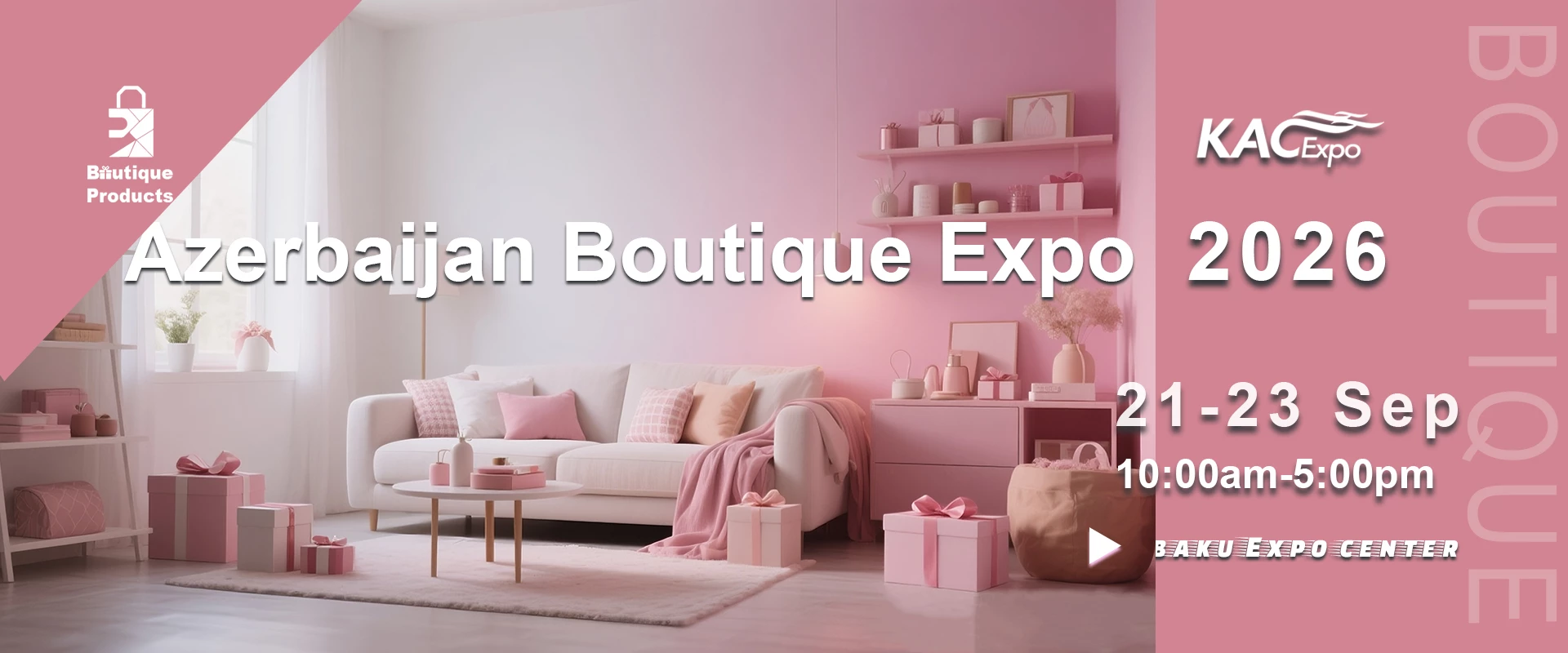
Azerbaijan Boutique Expo
Exhibition time: September 21-23, 2026
Exhibition location: Baku International Convention and Exhibition Center
Host: KAC International Exhibition Group
Co-organizer: KAC International Exhibition Group Limited / ASK / KOBIA / AZPROMO
Scope of exhibits:
1. Household goods: high-end furniture, kitchen supplies, ceramics and glass products, carpets and textiles, etc;
2. Fashion and Accessories: High end clothing, leather goods and bags, watches and clocks, shoes, etc;
3. Food and beverages: high-end food, alcohol and beverages, tea and coffee, healthy food, etc;
4. Beauty and personal care: beauty products, hairdressing products, high-end skin care products, perfume and cosmetics, beauty tools, etc;
5. Baby products: baby products, toys and educational products, children's clothing, etc;
6. Stationery and creative supplies: high-end writing tools, creative handmade tools, gifts, etc;
Project Introduction:
The Azerbaijan Sourcing Fair has been successfully held for 7 times. The previous edition featured 78 Chinese exhibitors and achieved an intended transaction volume of USD 21.6 million. The exhibition attracted manufacturers, brand owners, retailers, distributors, and channel partners from Azerbaijan and neighboring countries in the consumer goods sector. Well-known CIS wholesalers such as Azpetrol Service, Nakhchivan Trading Center, Lenta, Dixy Group, and Fozzy Holding attended the fair for negotiations and procurement. Exhibiting companies had the opportunity to communicate face-to-face with potential clients and establish long-term cooperative relationships.
Azerbaijan Introduction:
Azerbaijan is located in the southeastern part of the South Caucasus region at the crossroads of Europe and Asia, covering an area of 86,600 square kilometers. It borders the Caspian Sea to the east, Iran and Turkey to the south, Russia to the north, faces Kazakhstan and Turkmenistan across the Caspian Sea to the east, and shares borders with Georgia and Armenia to the west. Connecting Central Asia, Europe, the Middle East, and Russia, it is one of the countries along the China-Europe Railway Express route and an important node and trade corridor of the "Belt and Road" Initiative. It also possesses numerous trade ports, including the largest port in the Caspian region, the Port of Baku, providing natural advantages for international trade logistics. In 2025, Azerbaijan's GDP reached $75.94 billion, with a real GDP growth rate of 1.4%. As of July 2025, the population of Azerbaijan was 10.4 million, characterized by a young demographic structure and significant consumption potential. The nation is known for its sociable nature, love of lively gatherings, and enthusiasm for parties.
Azerbaijan is rich in oil and gas resources, ranking 20th in the world for oil reserves and 9th for natural gas reserves. The oil and gas sector, along with related industries, accounts for over 70% of the country's GDP, earning it the nickname "Little Dubai of West Asia." Azerbaijan's economy is based on energy from oil and gas extraction, supplemented by automotive repair, trade, agriculture, and a small amount of manufacturing. Its productivity in daily necessities is relatively low, with most supplies relying on imports, particularly high-quality products. In 2024, China became Azerbaijan's second-largest trading partner and the largest source of imports. Trade between China and the South Caucasus region sees 45% of its volume coming from Azerbaijan.
Development Trends and Future Prospects of the Consumer Goods Industry
In recent years, the Azerbaijani consumer goods market has shown a steady growth trend, with an average annual growth rate of approximately 4%-6%. This growth is attributed to the increase in residents' income levels and the upgrading of consumption concepts. With economic development, the number of middle-class citizens in Azerbaijan has been continuously increasing, and their demand for a high-quality life has boosted the purchasing power for consumer goods. Consumers are gradually shifting from basic needs to higher-level consumption demands, with increasingly high requirements for brand, quality, and convenience.
The Azerbaijani consumer goods market is in a phase of rapid development, with market size expanding steadily and consumer demands being diverse and full of potential. By embracing concepts such as healthy consumption, personalized demand customization, and environmental protection and sustainable development, Chinese enterprises are expected to achieve considerable gains in this market. In the future, with policy support and further release of consumption demand, Azerbaijan will become an extremely attractive and promising market. According to data from the State Statistical Committee of the Republic of Azerbaijan, the total import value of consumer goods in 2024 was approximately $3.5 billion, accounting for about 18% of Azerbaijan's total annual merchandise imports.
In recent years, with the rapid development of China's economy, Azerbaijanis have begun to actively learn about Chinese culture and have signed multiple cooperation agreements with China. The bilateral relations are friendly. Under the framework of "Belt and Road" cooperation, policy support and convenient conditions have been provided for Chinese enterprises. Azerbaijani market purchases a large number of Chinese goods, sparking a "China Fever" locally, and "Made in China" is highly popular there.
Diplomatic relations between the two countries:
The Belt and Road must be translated as "the Belt and Road." During this meeting, the two sides issued the Joint Statement on Establishing a Comprehensive Strategic Partnership between the People's Republic of China and the Republic of Azerbaijan and signed a series of cooperation documents in areas such as the joint construction of the Belt and Road and connectivity. In April 2025, the bilateral relationship was further elevated to a comprehensive strategic partnership, and an agreement on mutual visa exemptions for citizens holding ordinary passports was signed. Since 2017, Azerbaijan has actively participated in the Belt and Road Initiative and sought new opportunities for cooperation across various industries. The development strategies of the two countries align closely, and cooperation in jointly building the Belt and Road continues to advance. In 2024, bilateral trade between China and Azerbaijan reached $2.47 billion, marking a 43.3% year-on-year increase. From January to September 2025, bilateral trade reached $2.15 billion, reflecting a 24.3% year-on-year growth.
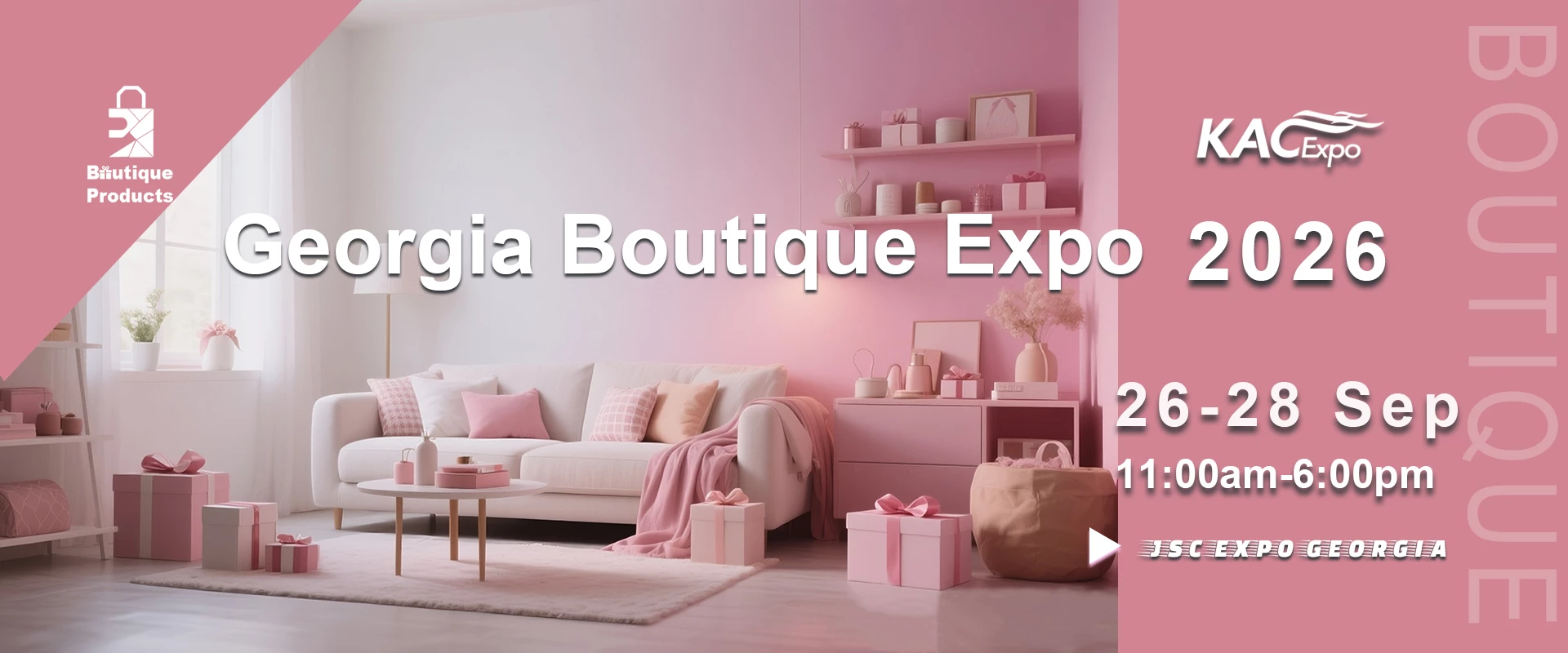 Georgia Boutique Expo
Exhibition time: September 26-28, 2026
Exhibition location: Tbilisi International Convention and Exhibition Center
Host: KAC International Exhibition Group
Co-organizer: KAC International Exhibition Group Limited / Georgian Chamber of Commerce and Industry
Scope of exhibits:
1. Household goods: high-end furniture, kitchen supplies, ceramics and glass products, carpets and textiles, etc;
2. Fashion and Accessories: High end clothing, leather goods and bags, watches and clocks, shoes, etc;
3. Food and beverages: high-end food, alcohol and beverages, tea and coffee, healthy food, etc;
4. Beauty and personal care: beauty products, hairdressing products, high-end skin care products, perfume and cosmetics, beauty tools, etc;
5. Baby products: baby products, toys and educational products, children's clothing, etc;
6. Stationery and creative supplies: high-end writing tools, creative handmade tools, gifts, etc;
Project Introduction:
The Georgia Premium Products Exhibition has been successfully held for 7 times. The previous edition featured 87 exhibitors from China, with an intended transaction volume of 18.6 million US dollars during the exhibition. The event attracted manufacturers, brand owners, retailers, distributors, and channel partners from Georgia and neighboring countries in the consumer goods sector. Notable attendees included well-known wholesalers from CIS countries such as X5 Retail Group, Azpetrol Service, Lenta, Dixy Group, and Fozzy Holding, who came for negotiations and procurement. Exhibitors will have the opportunity to engage in face-to-face communication with potential customers and establish long-term partnerships.
Georgia Introduction:
Georgia covers an area of 69,700 square kilometers and is located in the west-central part of the South Caucasus. It borders Russia to the north, Azerbaijan to the southeast, Armenia to the south, Turkey to the southwest, and the Black Sea to the west. Its geographical location is highly strategic, serving as the gateway from the Caucasus and Central Asia to Europe. It is a on the ancient Silk Road and the modern Eurasian transport corridor, and one of the important countries along the Belt and Road. Consequently, Georgia is a significant re-export trade country, with 80% of port cargo and 60% of railway transport goods being transit goods. On its Black Sea coast in the west, Georgia possesses two excellent deep-water ports, Poti and Batumi, as well as two pipeline oil terminals at Kulevi and Supsa, providing significant transportation advantages.
Georgia has four distinct seasons and a pleasant climate, earning it the reputation of being "God's garden." It is a world-renowned tourist destination and the birthplace of the former Soviet leader, Joseph Stalin. In 2025, Georgia demonstrated a strong economic performance, with a projected real GDP growth rate of 7.3% for the year. Its total foreign trade volume reached 25.816 billion US dollars, a year-on-year increase of 10.4%. China is Georgia's third-largest source of imports.
Development Trends and Future Prospects of the Consumer Goods Industry:
As an emerging market, Georgia boasts enormous consumption potential, attracting the attention of numerous Chinese enterprises. In recent years, with the development of the local economy, consumers' purchasing power has gradually increased, and the consumer goods market has continued to expand. Consumers are gradually shifting from basic needs to higher-level consumption demands, with increasingly higher requirements for brands, quality, and convenience. According to data released by the National Statistics Office of Georgia, the country's consumer goods market maintained steady growth in 2025. A monitoring report from the Georgian Competition and Consumer Protection Agency showed that the retail market for fast-moving consumer goods reached 13.698 billion lari (excluding VAT) in 2025, an increase of 6.61% compared to 2024. In terms of foreign trade, from January to October 2025, Georgia's total imports of consumer goods continued to expand, with foreign trade volume reaching 20.83 billion US dollars, a year-on-year increase of 8.6%.
The consumer goods market in Georgia is expected to maintain stable growth, primarily driven by economic growth, the proliferation of e-commerce, health and sustainable consumption trends, and opportunities arising from regional trade agreements. However, enterprises need to explore the local market through innovation and localization strategies.
Diplomatic relations between the two countries:
From July 26 to August 1, 2023, Georgian Prime Minister Giorgi Gakharia visited China to attend the opening ceremony of the 31st Universiade in Chengdu. The two sides held in-depth discussions on bilateral relations and international and regional issues of common concern, reaching broad consensus and unanimously deciding to elevate the bilateral relationship to a strategic partnership. Both sides agreed that since the establishment of diplomatic relations on June 9, 1992, cooperation in various fields has yielded fruitful results. Amid the current complex and ever-changing international landscape, the two sides unanimously committed to jointly expanding collaboration in political, economic, cultural, and other fields, strengthening coordination on international affairs, continuously deepening bilateral ties, and working together to safeguard regional and global peace, stability, and development.
In 2025, China-Georgia relations continued to deepen. In November, the two countries substantially concluded negotiations on the upgrading of the free trade agreement, further enhancing the quality and efficiency of bilateral economic and trade cooperation. That same year, Georgia's foreign minister visited China, and both sides expressed their intention to elevate the bilateral relationship to a comprehensive strategic partnership. Over the 33 years since the establishment of diplomatic ties, political mutual trust has been steadily consolidated, with notable achievements in cooperation across various fields. China has remained Georgia's largest source of imports and one of its principal trading partners for many consecutive years. From January to September 2025, bilateral goods imports and exports between China and Georgia reached $2.047 billion, marking a 23.4% year-on-year increase, with China's exports to Georgia totaling $1.776 billion, up 21.8% year-on-year.

Iraq Auto and Parts Expo
Exhibition time: September 2026 (tentative)
Exhibition location: Erbil International Expo Center, Iraq
Host: KAC International Exhibition Group
Scope of exhibits:
1. Whole vehicle: various sedans, off-road vehicles, construction vehicles, special vehicles, transport vehicles, trailers, concept cars, high-performance racing cars, luxury cars and other vehicles;
2. Automotive components and devices: various parts and OEMs, drive parts, chassis, body, automotive batteries, internal devices and components, automotive power and electronic control systems, motors and electrical appliances, vehicle lighting, electronic systems, comfort electronic products, etc;
3. Automotive parts and modified vehicles: vehicle parts, special equipment, modified vehicles, performance testing systems, etc;
4. Tire Zone: Tires, wheel hubs, tire repair, tire management system, tire sales and storage equipment;
5. Maintenance: vehicle service and repair equipment, vehicle body maintenance, vehicle body painting, garage construction and management, etc;
6. Automotive services and cleaning stations: automotive services, maintenance and cleaning equipment, vehicle refurbishment, gas station equipment, etc.
Project Introduction:
The automobile market in Iraq is one of the largest markets in the Middle East and North Africa region. The Iraq Auto and Parts Exhibition is held once a year and has been held XXX times so far. The exhibition aims to provide an important platform for car manufacturers and suppliers to showcase their products and expand their business. Through a strong network, the previous exhibition invited 210 exhibitors from the automotive and parts industry in 12 countries and regions around the world, attracting 23000 visitors from the Middle East, the Arabian Gulf, Europe, Russia, and the Commonwealth of Independent States. It is a leading platform for showcasing new technologies, solutions, services, products, and innovations to the Iraqi and Middle Eastern markets.
Introduction to Iraq:
The Republic of Iraq is located in southwestern Asia, northeast of the Arabian Peninsula, with a land area of 438317 square kilometers and a population of 40.22 million. In 2023, Iraq's gross domestic product reached 255 billion US dollars, a year-on-year increase of 2.3%.
After the Iraq War, Iraq pursued a proactive and pragmatic foreign policy, emphasizing the development of relations with major powers; Seeking cooperation with neighboring countries to create a favorable external environment for domestic stability; Strive to seek assistance from the international community for the post-war reconstruction of Iraq. At the beginning of the 21st century, Iraq had restored or established diplomatic relations with nearly 80 countries and resumed activities within regional and international organizations such as the Arab League, United Nations agencies, and the International Monetary Fund.
Iraq has the fifth largest proven oil reserves in the world. Oil exports are the absolute pillar of a country's fiscal revenue. In addition to abundant oil and gas resources, it also has fertile farmland, water resources, and a young population structure. After decades of war and international sanctions, infrastructure has suffered severe damage. The current core task is to rebuild and promote economic diversification on a large scale, reducing dependence on oil.
Market opportunities:
Iraq is located in the northeast of the Arabian Peninsula, in the southwest region of Asia. It has signed free trade agreements and relevant economic cooperation agreements with China, the United States, Türkiye, Iran and other countries. In terms of automobile manufacturing, Iraq has numerous car manufacturers and local dealers. The entire Iraqi automotive market has been steadily growing, providing market opportunities for car manufacturers. Iraq has been committed to supporting the development of the automotive industry and implementing policies to support and promote car exhibitions. By introducing preferential policies and providing a favorable investment environment, we have attracted investment from major international automobile and component manufacturers. The exhibition showcases new automotive products and technologies, including sedans SUV、 Trucks, motorcycles, etc.
According to statistics, the Iraqi automobile market continued to grow in car sales from 2021 to 2022, surpassing 17.6% in 2019. Iraq is an ideal place for China to enter the automotive market in the region.
Diplomatic relations between the two countries:
Since China and Iraq signed the "the Belt and Road" cooperation document in 2015, bilateral cooperation in various fields has yielded fruitful results. China actively participates in the reconstruction of energy, infrastructure and other fields in Iraq, providing assistance to the best of its ability for Iraq's economic and social development. China is Iraq's largest trading partner, and Iraq is China's third largest trading partner among Arab countries. In 2023, the bilateral trade volume between China and Iran will be 49.74 billion US dollars. As a country along the the Belt and Road, Iraq will welcome more Chinese enterprises in the future.
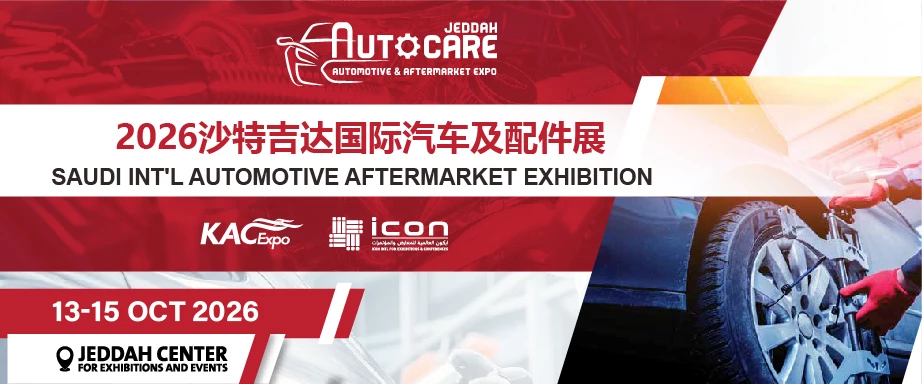
The 17th Saudi Int’l Automotive Aftermarket Exhibition(Saudi Autocare)
Exhibition time: October 13-15, 2026
Venue: Jeddah International Exhibition Center, Saudi Arabia
Host: KAC International Exhibition Group / Jeddah Chamber of Commerce & Industry
Scope of exhibits:
1. Whole vehicle: various sedans, off-road vehicles, construction vehicles, special vehicles, transport vehicles, trailers, concept cars, high-performance racing cars, luxury cars and other vehicles;
2. Automotive components and devices: various parts and OEMs, drive parts, chassis, body, automotive batteries, internal devices and components, automotive power and electronic control systems, motors and electrical appliances, vehicle lighting, electronic systems,
Comfort electronic products, etc;
3. Automotive parts and modified vehicles: vehicle parts, special equipment, modified vehicles, performance testing systems, etc;
4. Tire Zone: Tires, wheel hubs, tire repairs, tire management systems, tire sales and storage equipment, etc;
5. Maintenance: vehicle service and repair equipment, vehicle body maintenance, vehicle body painting, garage construction and management, etc;
6. Automotive services and cleaning stations: automotive services, maintenance and cleaning equipment, vehicle refurbishment, gas station equipment, etc.
Project Introduction:
Introduction to Saudi Arabia:
Saudi Arabia is located in the southwestern part of the Arabian Peninsula in Asia, occupying 70% of the entire Arabian Peninsula. It is bordered by the Persian Gulf to the east and the Red Sea to the west, sharing borders with Jordan, Iraq, Kuwait, the United Arab Emirates, Oman, Yemen, and Egypt. In 2025, Saudi Arabia's GDP reached 1.27 trillion US dollars, with a per capita GDP of 35,231 US dollars and a GDP growth rate of 4.0%. The Saudi currency is the Saudi Riyal, which has a fixed exchange rate of 1:3.75 against the US dollar, offering significant trade advantages. Saudi Arabia's population exceeds 34.56 million, featuring a young demographic structure with a median age of 29.6 years, demonstrating strong consumer desire and purchasing power. The consumption spectrum is broad, encompassing wealthy nobility, affluent middle-class citizens, ordinary people, and foreign laborers accounting for nearly 45% of the total population, forming high, middle, and low consumer groups.
The Saudi economy is primarily an energy economy based on resource extraction, with its oil reserves and production ranking among the world's highest. Oil serves as the main pillar of Saudi Arabia's economy. Its manufacturing sector is relatively underdeveloped, with the exception of oil and its byproducts, and a large quantity of materials rely on imports. China is Saudi Arabia's largest trading partner, largest export destination, and largest source of imports. In 2025, China accounted for 25%-28% of Saudi Arabia's import share, demonstrating the strong economic complementarity between the two countries.
Market opportunities:
Saudi Vision 2030 Reform Plan
In recent years, with the rise of Saudi Arabia's third-generation leader, Mohammed bin Salman, the Kingdom has embarked on ambitious reforms aimed at creating a sustainable new economy that can move beyond oil dependence. Saudi Arabia aspires to become the heart of the Arab and Islamic world, a global investment powerhouse, and a global hub connecting Asia, Europe, and Africa in future development, announcing the "Vision 2030" plan. This visionary plan encompasses goals across multiple sectors, including infrastructure, energy, economy, society, and culture. Through massive investments, Saudi Arabia is transforming the global business landscape and attracting worldwide attention.
Saudi Arabia is one of the largest automotive markets in the Middle East. With rising resident income levels and the gradual popularization of automotive culture, vehicle demand continues to grow. According to market research, Saudi Arabia's annual automobile sales are expected to grow at a rate of approximately 5% per year. The youthful consumer demographic's demand for new models and high-tech configurations also provides abundant market opportunities for automotive companies.
Meanwhile, to promote economic transformation, the Saudi government has introduced a series of preferential policies to attract foreign investment in automotive modification and manufacturing. Saudi Arabia aims to enhance its industrial level by increasing local manufacturing capabilities and technology transfer. This provides favorable trade environment and policy support for Chinese automobile and auto parts enterprises.
Chinese automotive companies have developed rapidly in areas such as electric vehicles and intelligent driving technologies, meeting the Saudi market's demand for emerging technologies. In recent years, brands like BYD and NIO have begun entering the Middle East market and have gained certain market shares. Saudi Arabia's emphasis on environmental protection and reducing carbon emissions further promotes the construction of electric vehicles and related infrastructure, providing broad market space for Chinese electric vehicle companies.
As Saudi Arabia's second-largest city and a port city on the Red Sea coast, Jeddah hosts the Ministry of Foreign Affairs and various foreign embassies. It possesses Saudi Arabia's largest port and serves as an extremely important financial center. Additionally, because Jeddah is only 70 kilometers from Mecca, the holy city and tourist destination for 1.8 billion Muslims worldwide, it is also Saudi Arabia's most important tourism city. As Saudi Arabia's economic and trade center, with the advancement of the country's reform and opening-up, Jeddah's trade prospects are expected to surpass Dubai, becoming the largest trade market in the Middle East. Compared to the Dubai market, which has a small market volume and focuses mainly on low-price re-exports, Saudi Arabia's local end-market has tremendous advantages of large volume and high prices, providing substantial profit guarantees for Chinese foreign trade enterprises.
Diplomatic relations between the two countries:
In recent years, the development of China Saudi Arabia relations has shown three hotspots: high-level exchanges, economic and trade cooperation, and cultural exchanges. With the steady progress of the "the Belt and Road" initiative, Saudi Arabia actively responds to China's call. China and Saudi Arabia are each other's strategic partners at the national level, and their diplomatic relations are stable. In March 2023, with the assistance of China, Saudi Arabia and Iran reached an agreement to restore diplomatic relations. On March 29 of the same year, the Saudi Arabian Cabinet approved the decision to join the Shanghai Cooperation Organization. In November 2023, the People's Bank of China and the Central Bank of Saudi Arabia signed a bilateral currency swap agreement, indicating that China Saudi trade has entered a new stage and is another milestone in China Saudi trade. Under the guidance of national strategy, China and Saudi Arabia have engaged in comprehensive cooperation in military, economic, cultural, scientific, and sociological fields, reflecting the close and stable strategic partnership between the two countries and laying a solid foundation for future cooperation.
In October 2024, the Saudi government announced the construction of a four square kilometer Saudi Central Special Economic Zone within King Salman International Airport. The economic zone will be jointly constructed by King Salman International Airport and international investment institution Yida Capital, with a focus on developing manufacturing, logistics, and trade industries to promote economic and trade cooperation between China and Saudi Arabia. The economic zone is expected to start construction in 2025. In 2025, China Saudi Arabia relations will celebrate the 35th anniversary of the establishment of diplomatic relations. In December, Wang Yi, member of the Political Bureau of the Communist Party of China Central Committee and Minister of Foreign Affairs, visited Saudi Arabia and signed the "Agreement between the People's Republic of China and the Kingdom of Saudi Arabia on Mutual Exemption of Visa for Personnel Holding Diplomatic, Official and Special Passports". The trade cooperation between the two countries continues to deepen, and the bilateral trade volume has exceeded 89.5 billion US dollars from January to October 2025, with China firmly ranking as Saudi Arabia's largest trading partner. In May of the same year, more than 70 agricultural cooperation agreements were signed between Chinese and Saudi Arabian enterprises and institutions, with a total amount exceeding 4 billion US dollars, covering areas such as green technology application, intelligent equipment output, biological breeding research and development, and cross-border supply chain.

Azerbaijan Auto and Parts Expo
Exhibition time: September 21-23, 2026
Exhibition location: Baku International Convention and Exhibition Center
Host: KAC International Exhibition Group
Co-organizer:KAC International Exhibition Group Limited / ASK / KOBIA / AZPROMO
Scope of exhibits:
1. Whole vehicle: various types of sedans and used cars, new energy vehicles, off-road vehicles, construction vehicles, special vehicles, transport vehicles, trailers, concept cars, luxury cars, and other vehicles;
2. Automotive components and devices: various parts and OEMs, drive parts, chassis, body, automotive batteries, internal devices and components, automotive power and electronic control systems, motors and electrical appliances, vehicle lighting, electronic systems, comfort electronic products, etc;
3. Automotive parts and modified vehicles: vehicle parts, special equipment, modified vehicles, performance testing systems, etc;
4. Tire Zone: Tires, wheel hubs, tire repairs, tire management systems, tire sales and storage equipment, etc;
5. Maintenance: vehicle service and repair equipment, vehicle body maintenance, vehicle body painting, garage construction and management, etc;
6. Car service stations and cleaning stations: car services, maintenance and cleaning equipment, vehicle refurbishment, gas station equipment, etc;
Project Introduction:
The Azerbaijan Autoshow and Auto Parts Expo has been successfully held for 7 times. The previous edition featured 78 exhibitors from China, with an intended transaction volume of 21.6 million US dollars. The exhibition attracted manufacturers, brand owners, retailers, distributors, and channel partners from Azerbaijan and neighboring countries in the home appliance and consumer electronics sectors. Notable attendees included well-known wholesalers from CIS countries such as AvtoVAZ, Euro Auto Group, Azpetrol Auto Group, Avtobaza, and Avtoexport, who came for negotiations and procurement. Exhibitors will have the opportunity to engage in face-to-face communication with potential customers and establish long-term partnerships.
Azerbaijan Introduction:
Azerbaijan is located in the southeastern part of the South Caucasus region at the crossroads of Europe and Asia, covering an area of 86,600 square kilometers. It borders the Caspian Sea to the east, Iran and Turkey to the south, Russia to the north, faces Kazakhstan and Turkmenistan across the Caspian Sea to the east, and neighbors Georgia and Armenia to the west. Connecting Central Asia, Europe, the Middle East, and Russia, it is one of the countries along the China-Europe Railway Express route, a key node and trade corridor of the Belt and Road Initiative, and home to numerous trade ports including the largest port on the Caspian Sea, the Port of Baku, giving it a natural advantage in international trade logistics. In 2025, Azerbaijan's GDP reached 75.94 billion US dollars, with a real GDP growth rate of 1.4% for the year. As of July 2025, Azerbaijan's population was 10.4 million, featuring a young demographic structure with significant consumption potential. The nation is characterized by its lively nature, love for socializing, and enthusiasm for parties.
Azerbaijan is rich in oil and gas resources, ranking 20th in the world for oil reserves and 9th for natural gas reserves. The oil and gas sector, along with related industries, accounts for over 70% of the country's GDP, earning it the nickname "Little Dubai of West Asia." The country's economy is primarily based on energy from oil and gas extraction, supplemented by industries such as automobile repair, trade, agriculture, and a small amount of manufacturing. Productivity in terms of living necessities is relatively low, with most supplies relying on imports, particularly high-quality products. In 2024, China became Azerbaijan's second-largest trading partner and the largest source of imports, with 45% of China's trade volume with the South Caucasus region coming from Azerbaijan.
Development Trends and Future Prospects of the Automotive and Auto Parts Industry:
Diplomatic relations between the two countries:
The Belt and Road must be translated as "the Belt and Road." During this meeting, the two sides issued the Joint Statement on Establishing a Comprehensive Strategic Partnership between the People's Republic of China and the Republic of Azerbaijan and signed a series of cooperation documents in areas such as the joint construction of the Belt and Road and connectivity. In April 2025, the bilateral relationship was further elevated to a comprehensive strategic partnership, and an agreement on mutual visa exemptions for citizens holding ordinary passports was signed. Since 2017, Azerbaijan has actively participated in the Belt and Road Initiative and sought new opportunities for cooperation across various industries. The development strategies of the two countries align closely, and cooperation in jointly building the Belt and Road continues to advance. In 2024, bilateral trade between China and Azerbaijan reached $2.47 billion, marking a 43.3% year-on-year increase. From January to September 2025, bilateral trade reached $2.15 billion, reflecting a 24.3% year-on-year growth.
